WEXLEY BLOG

For the work behind the book.

Ideas, practical publishing guidance, and considered notes for authors building books from first page to finished file.

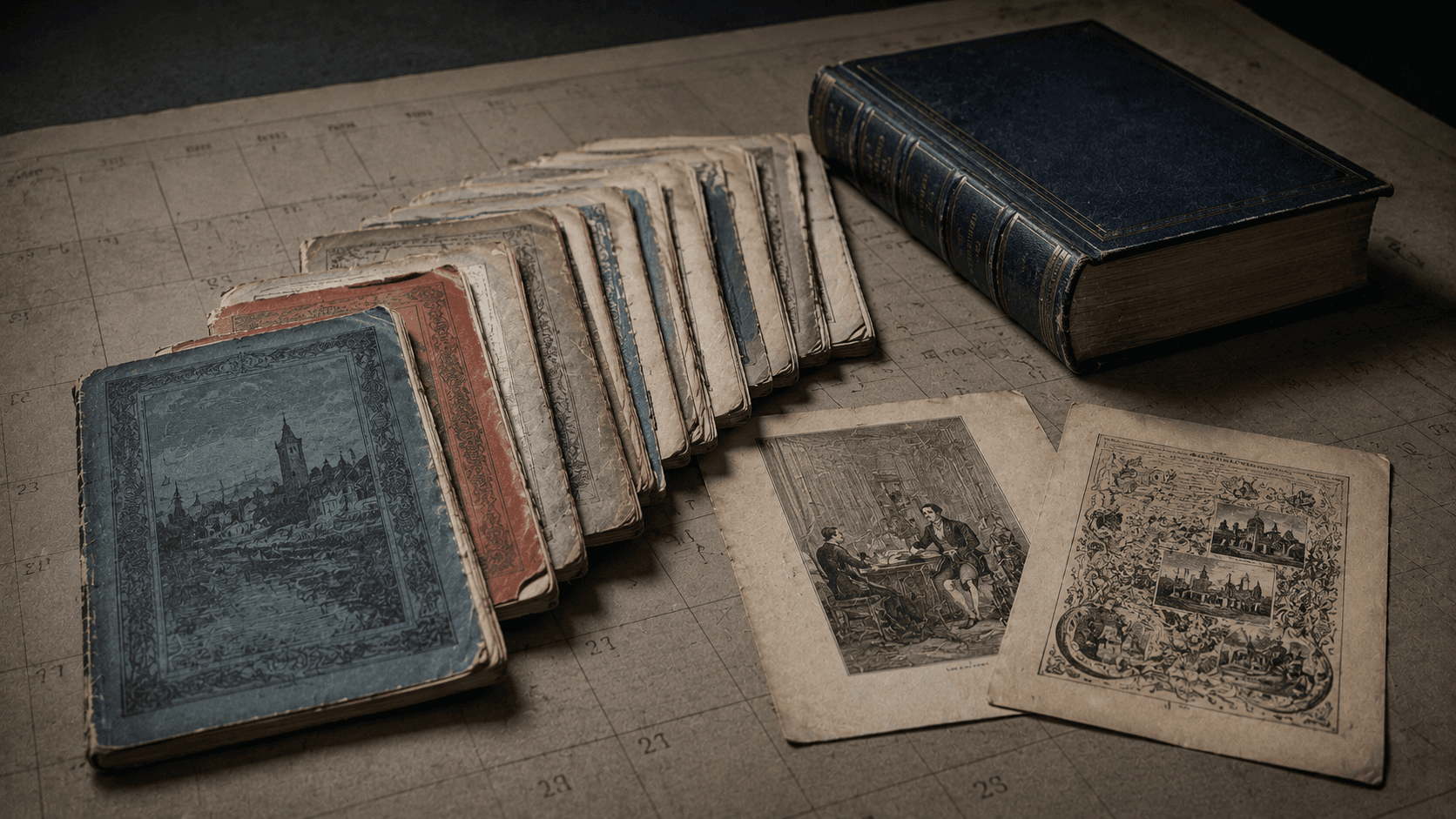
Victorian serial parts arranged in sequence beside a later bound volume.

The Serial Changed the Novel's Clock

Serial fiction was shaped by a calendar: public intervals changed how novels were planned, illustrated, remembered, revised, and read.

Read post →
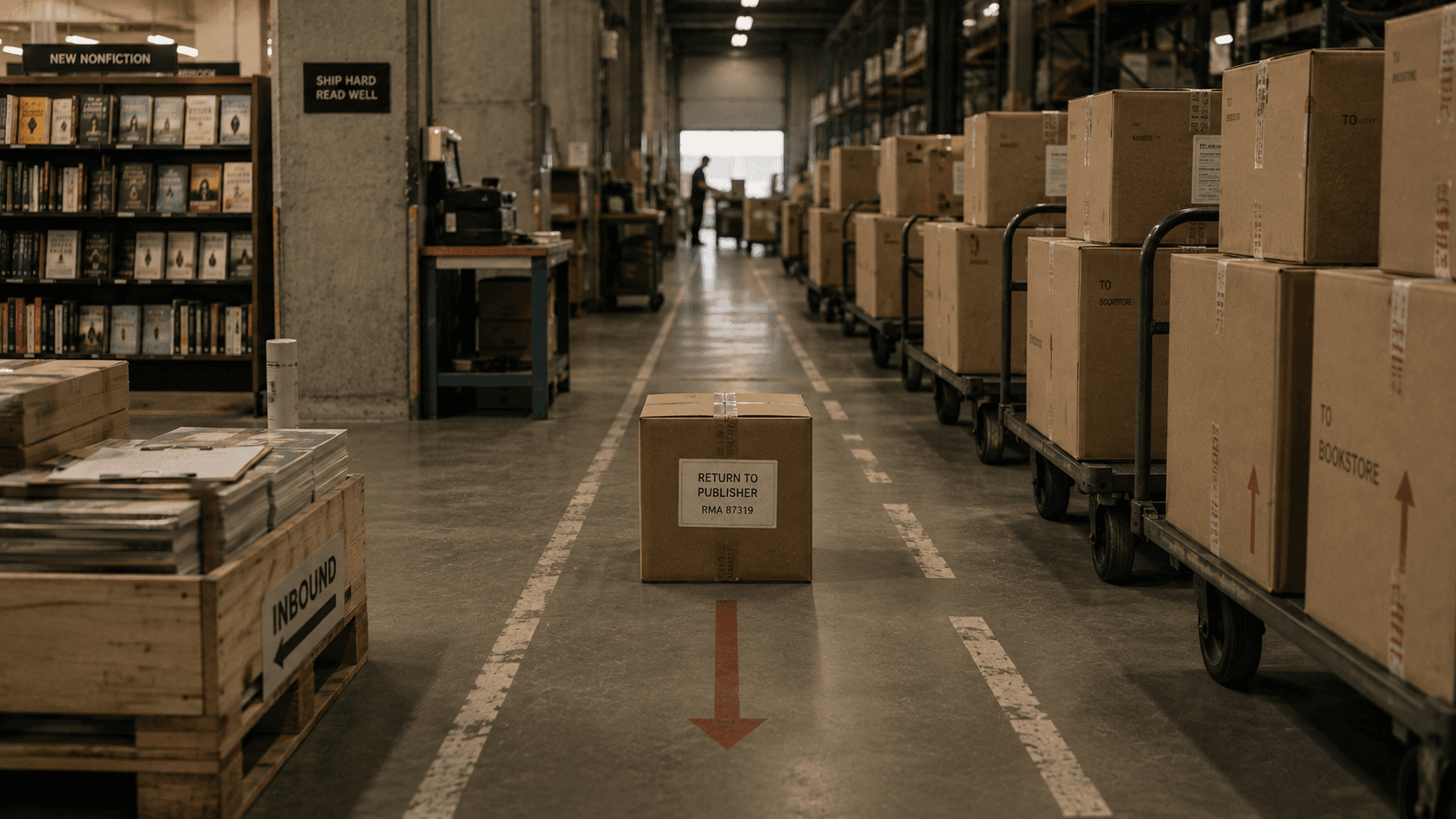
One carton of books returning through a warehouse while other cartons move toward stores.

The Returnable Book Changed Publishing

Book returns do more than reverse sales. They decide who carries the risk of an unread copy—and help determine which books reach a shelf at all.

Read post →
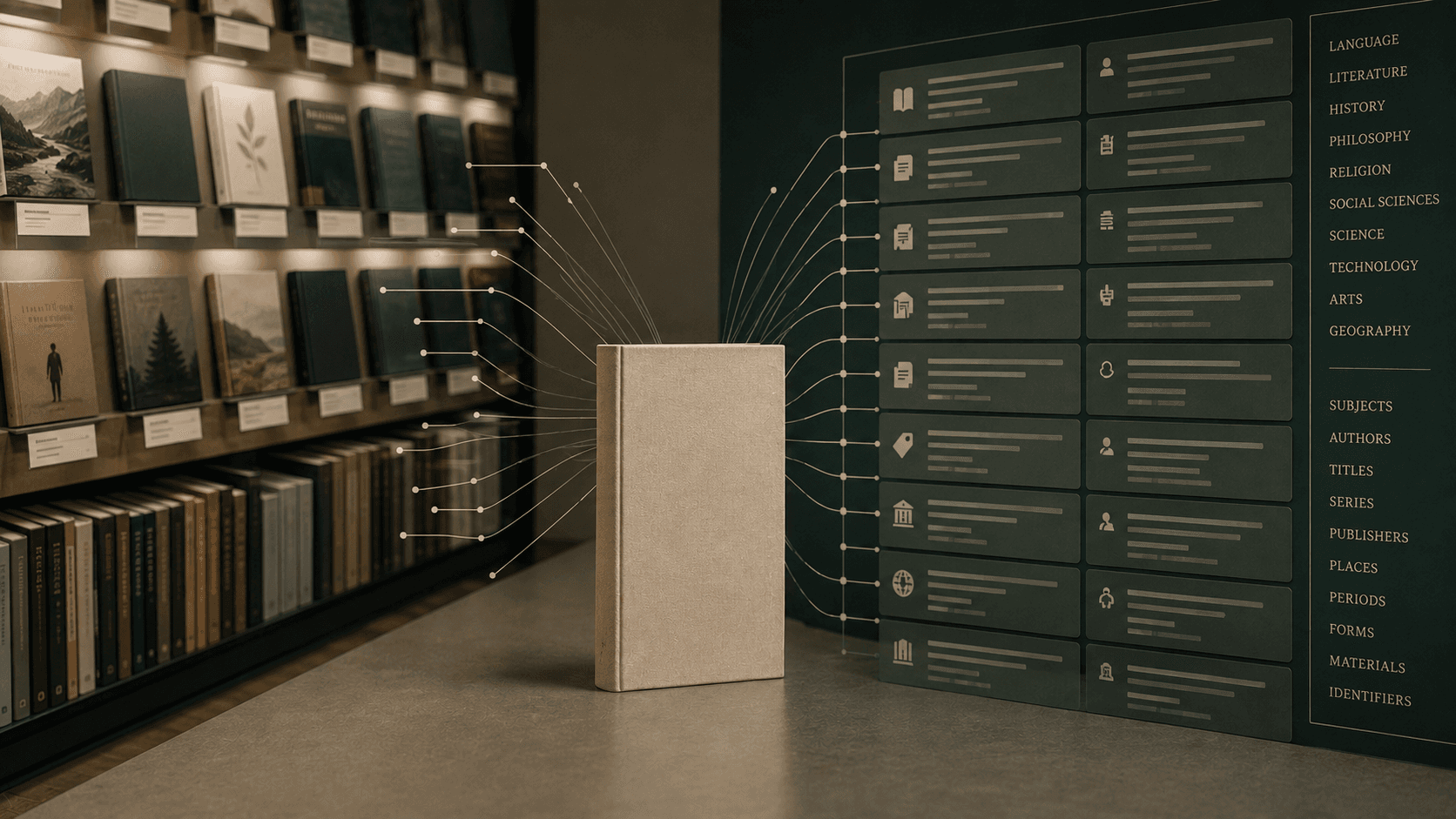
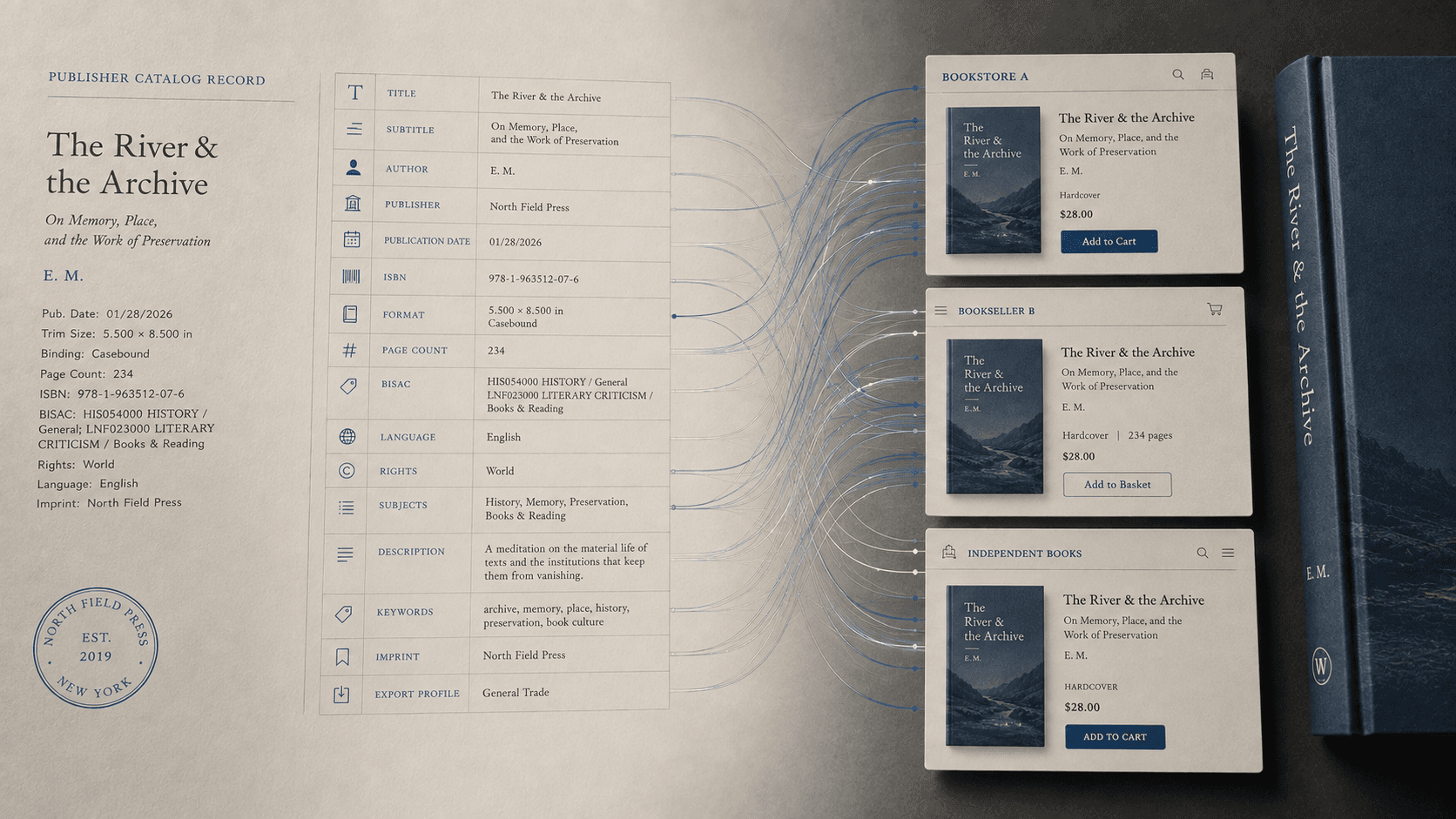
 Structured book metadata flowing from one publisher record to several retail displays.

ONIX Is the Book the Reader Never Sees

Before a book reaches a shelf, its commercial identity is already moving through ONIX. That record has a lifecycle, receivers, and failure modes of its own.

Read post →
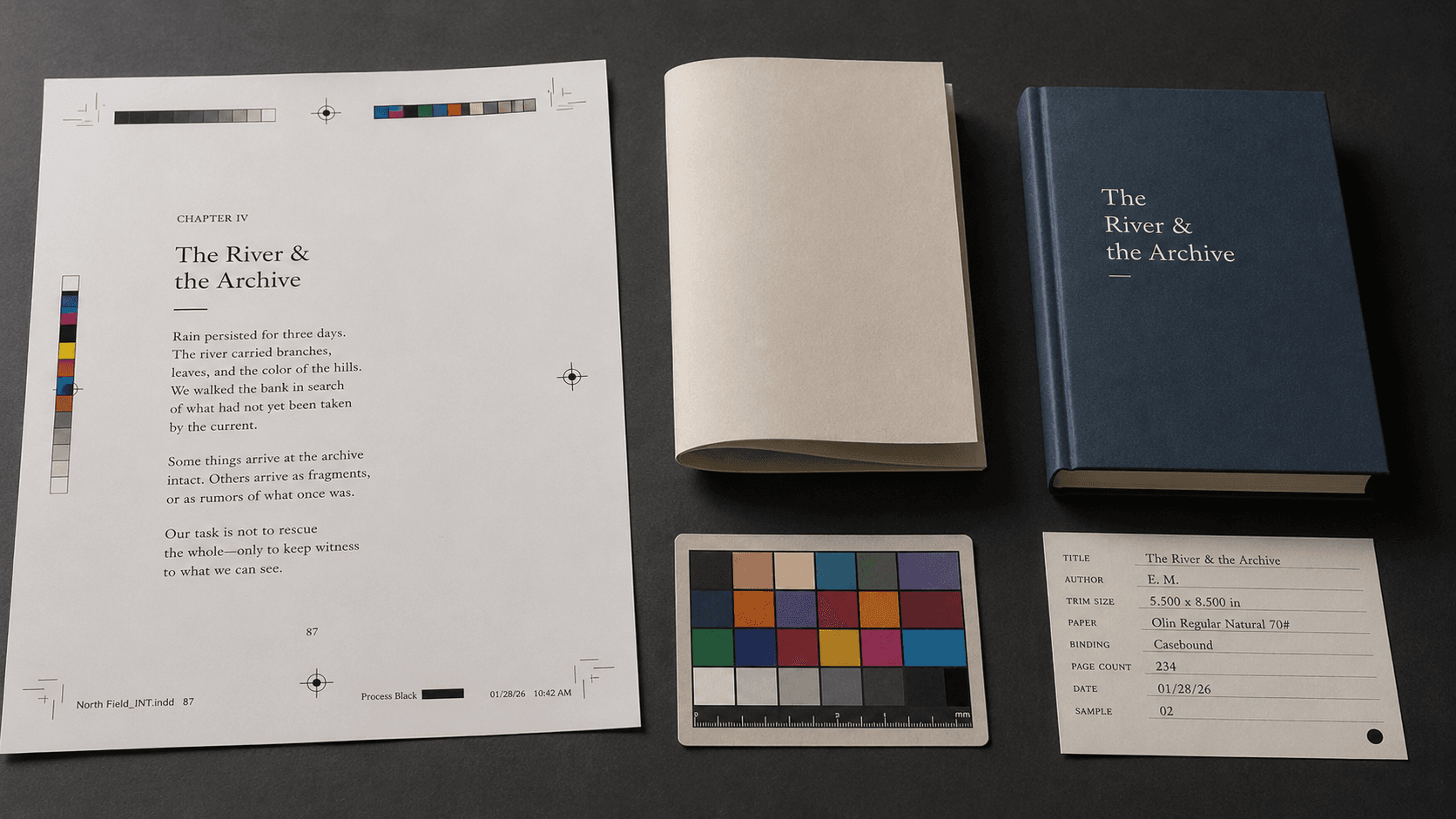
Several kinds of book proofs arranged together, including pages, a folded dummy, and a bound sample.

A Proof Is a Question, Not a Preview

A proof can only verify the properties it was made to represent. Better proofing begins by naming the uncertainty each artifact is supposed to reduce.
Read post →
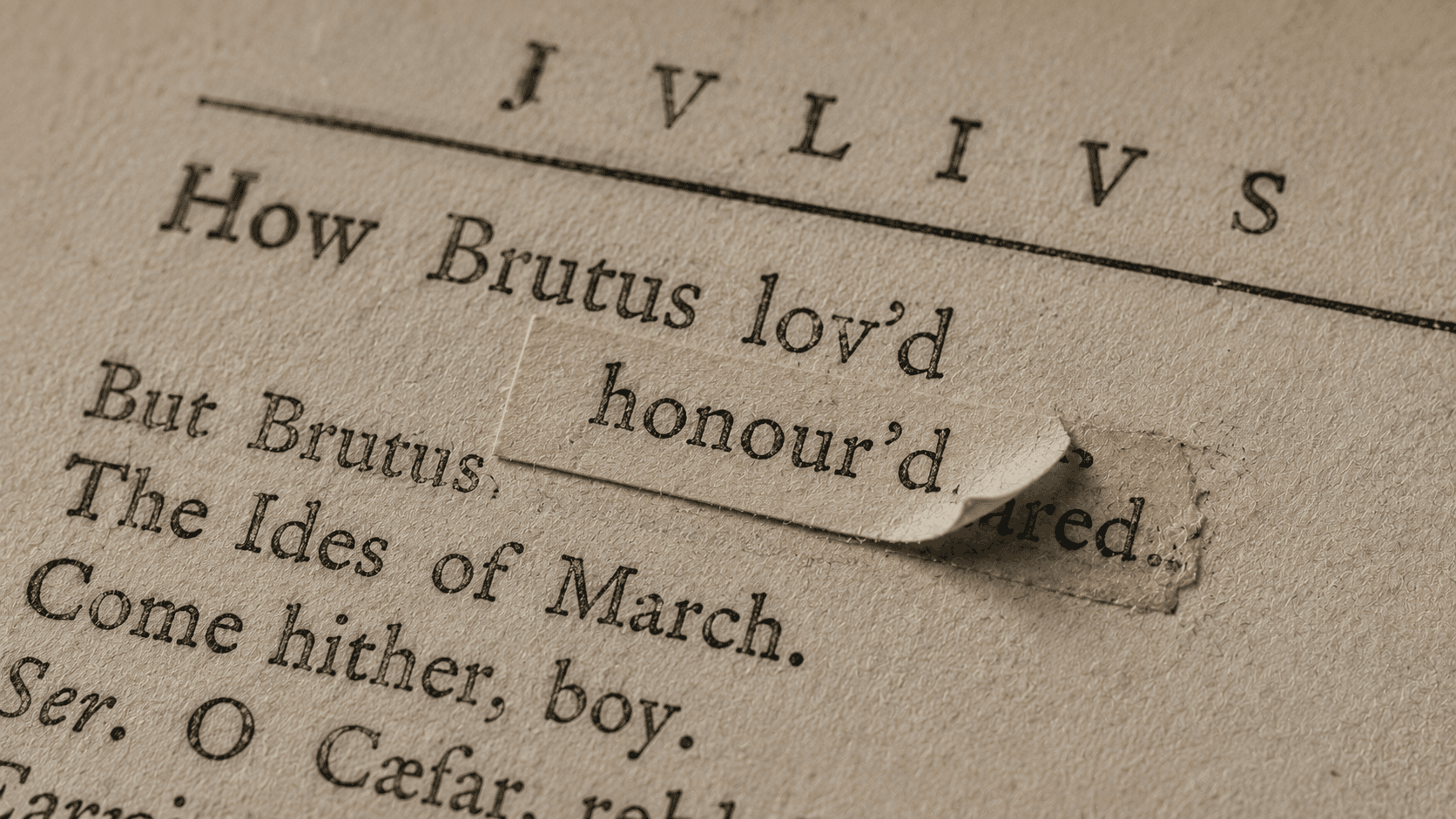
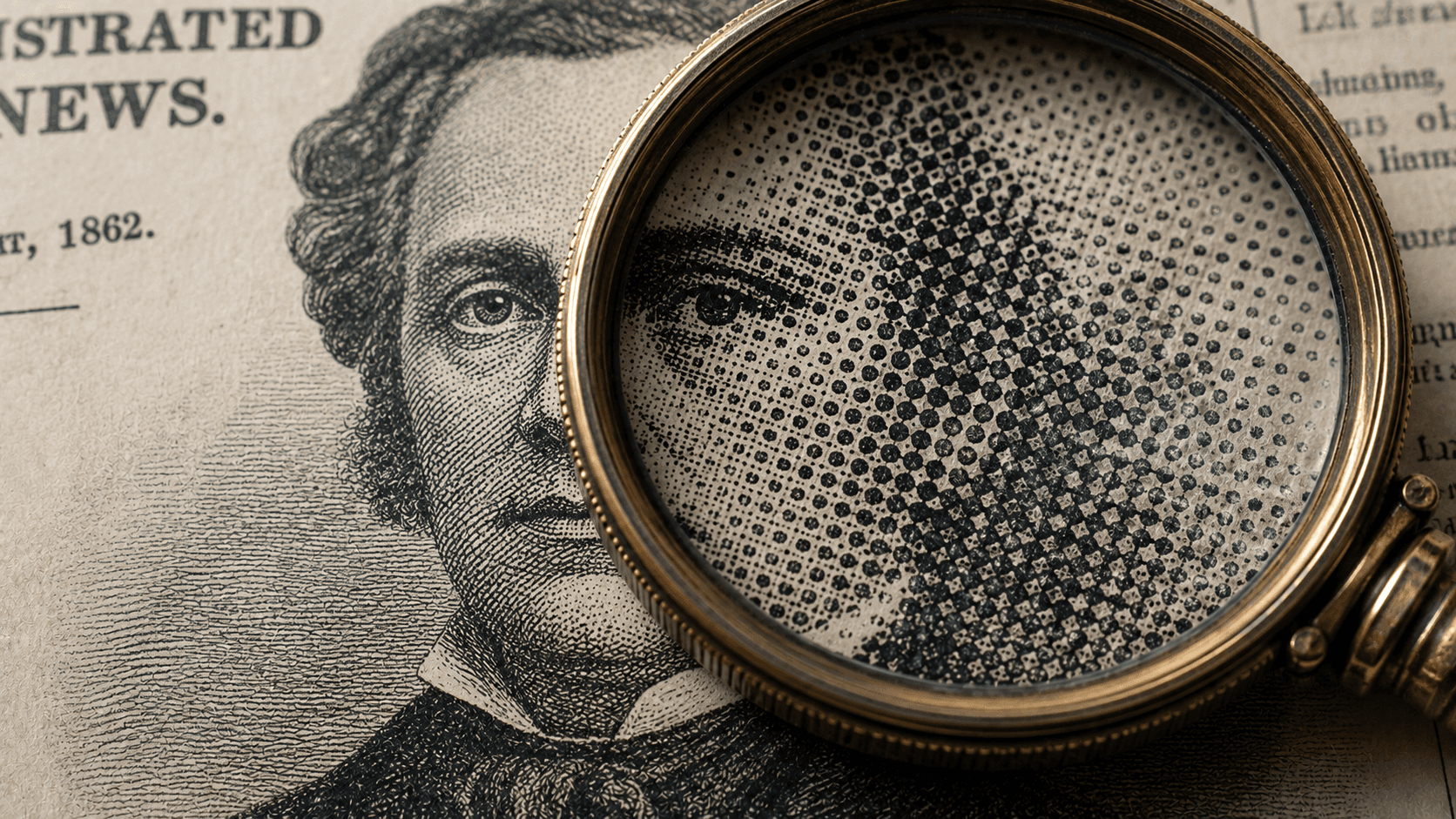
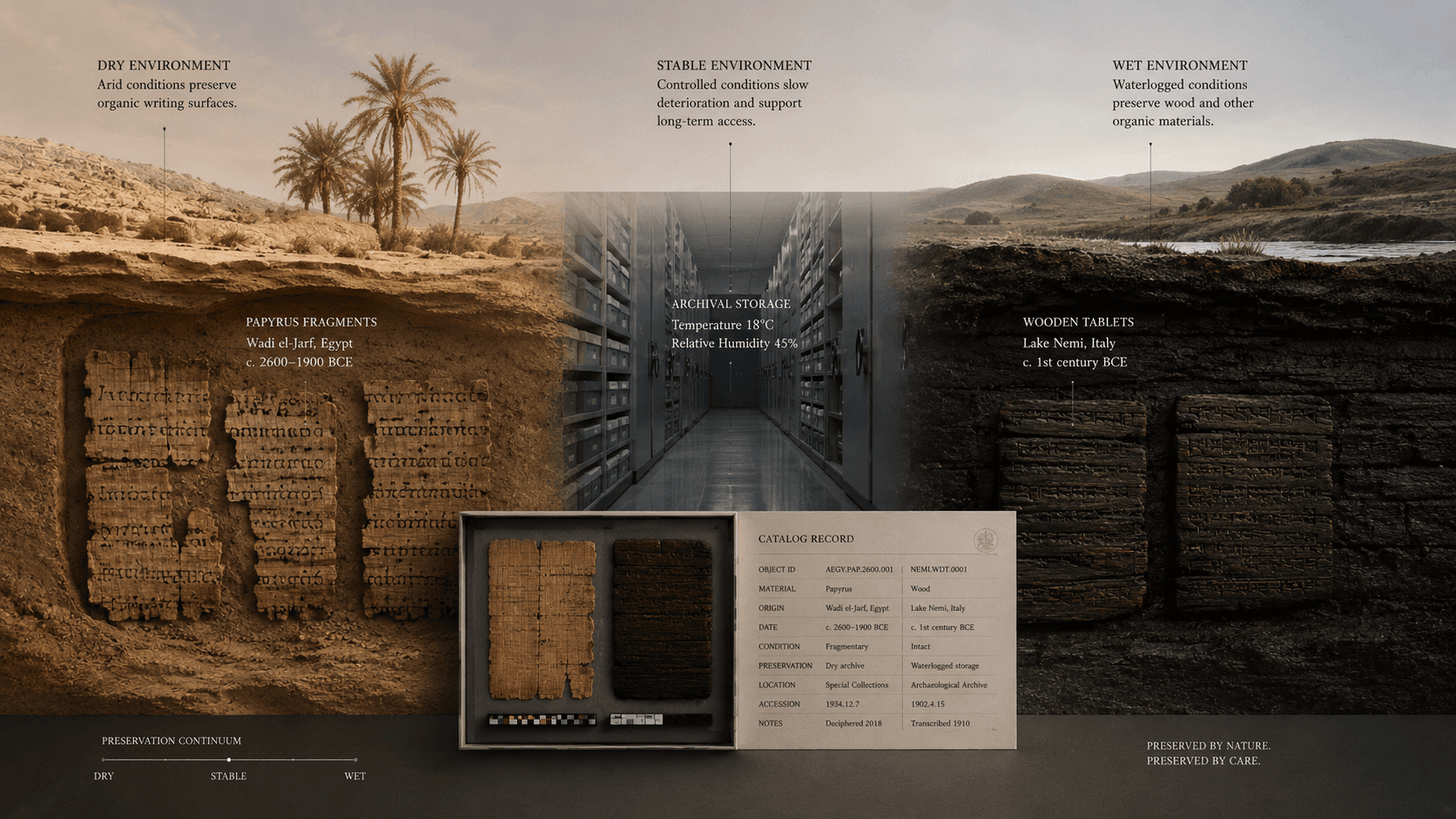
Close view of a small printed correction slip pasted over a word on an old book page.

Errata Are Version History in Print

Printed books have versions too. Their changes survive in corrected sheets, pasted slips, errata lists, and the differences between individual copies.

Read post →
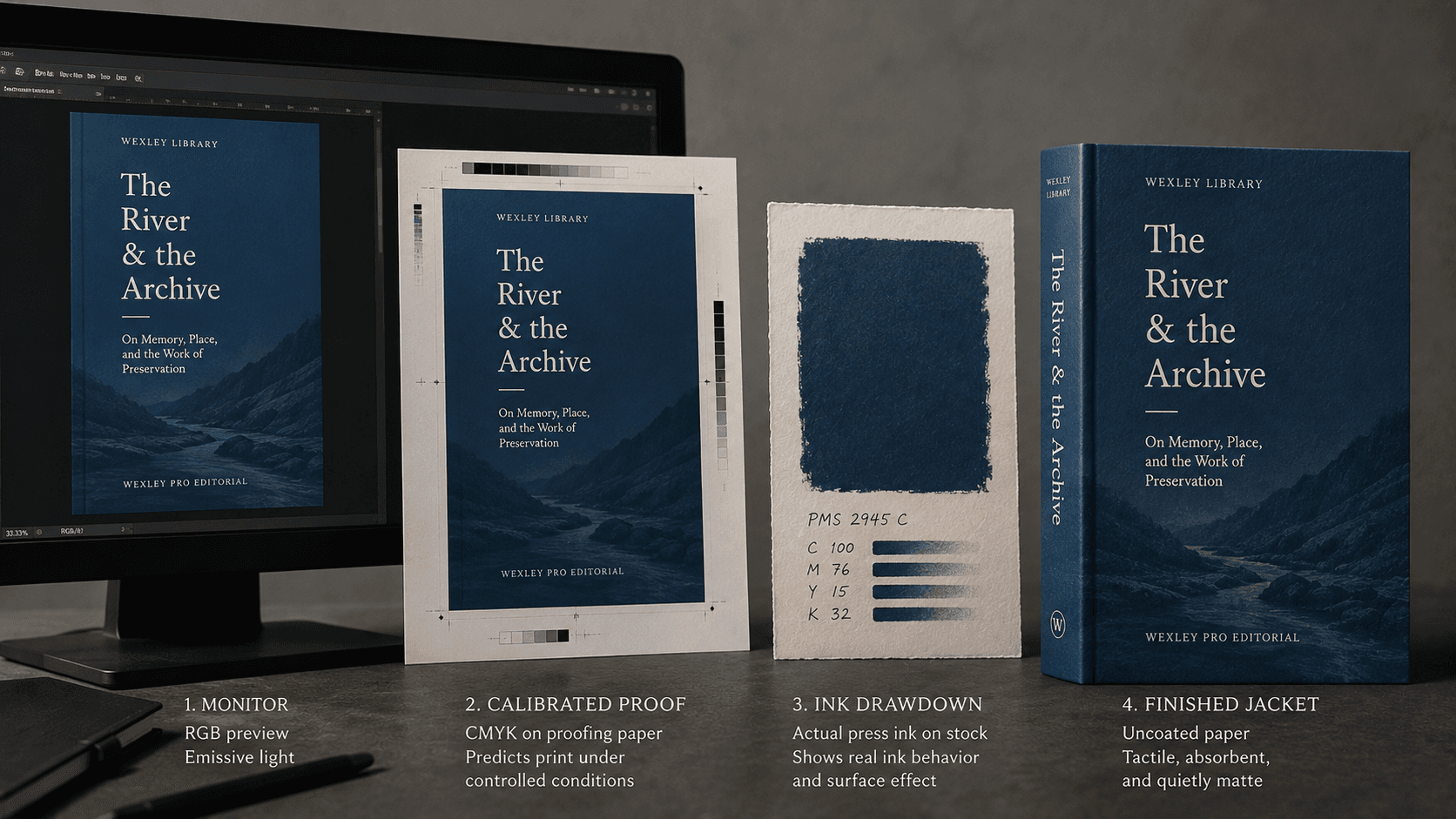
One blue cover appears on a monitor, proof, ink sample, and finished printed jacket.

Color Is a Contract Between Devices

A color number needs a space, profile, output condition, and viewing assumptions. Color management coordinates translation rather than exact identity.

Read post →
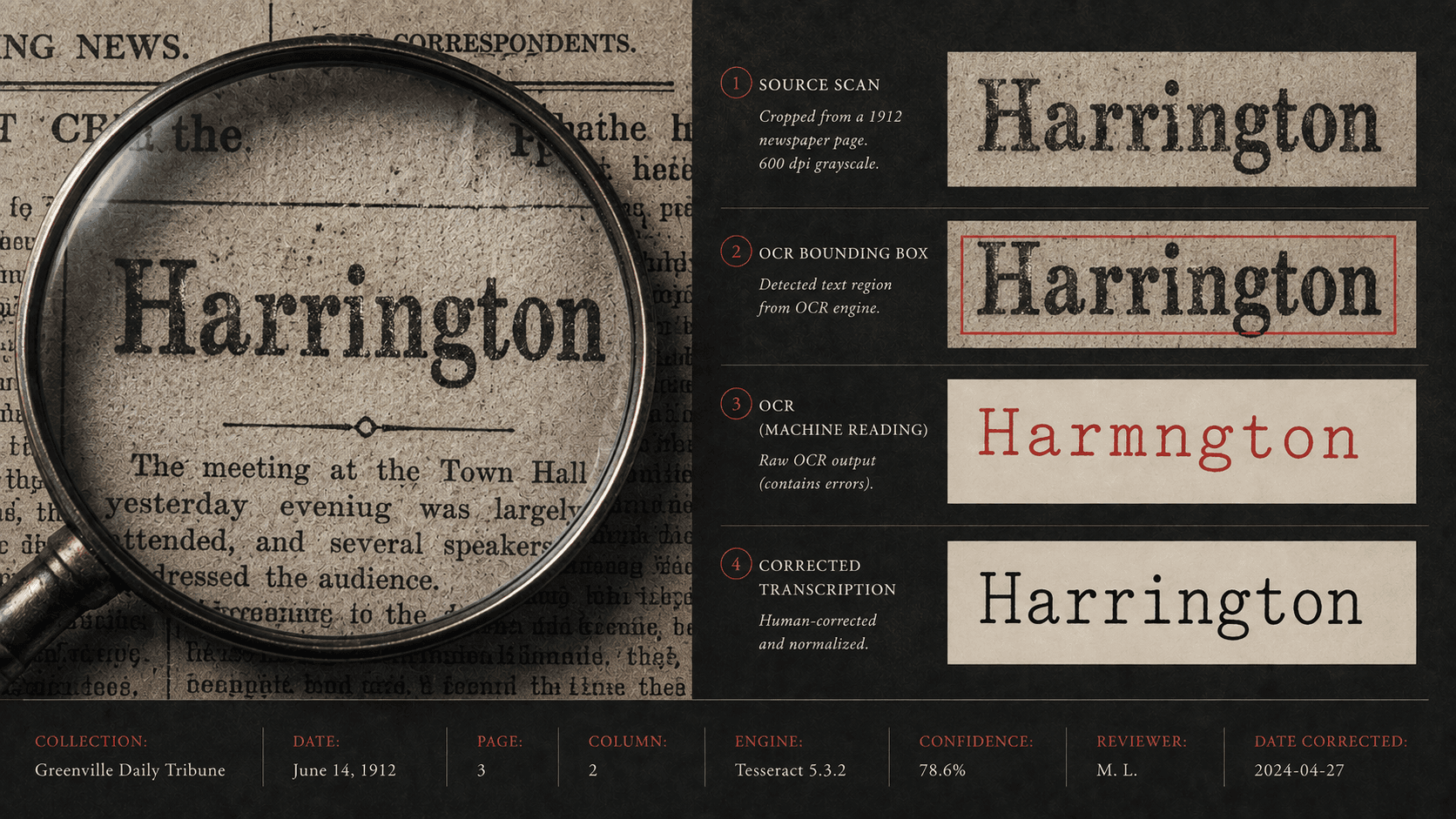
A scanned newspaper word is shown beside its OCR error, layout box, and corrected transcription.

OCR Does Not Recover a Text

OCR is a machine's transcription of an image, not the recovered source. Useful digital collections preserve the scan, inference, structure, and correction.

Read post →
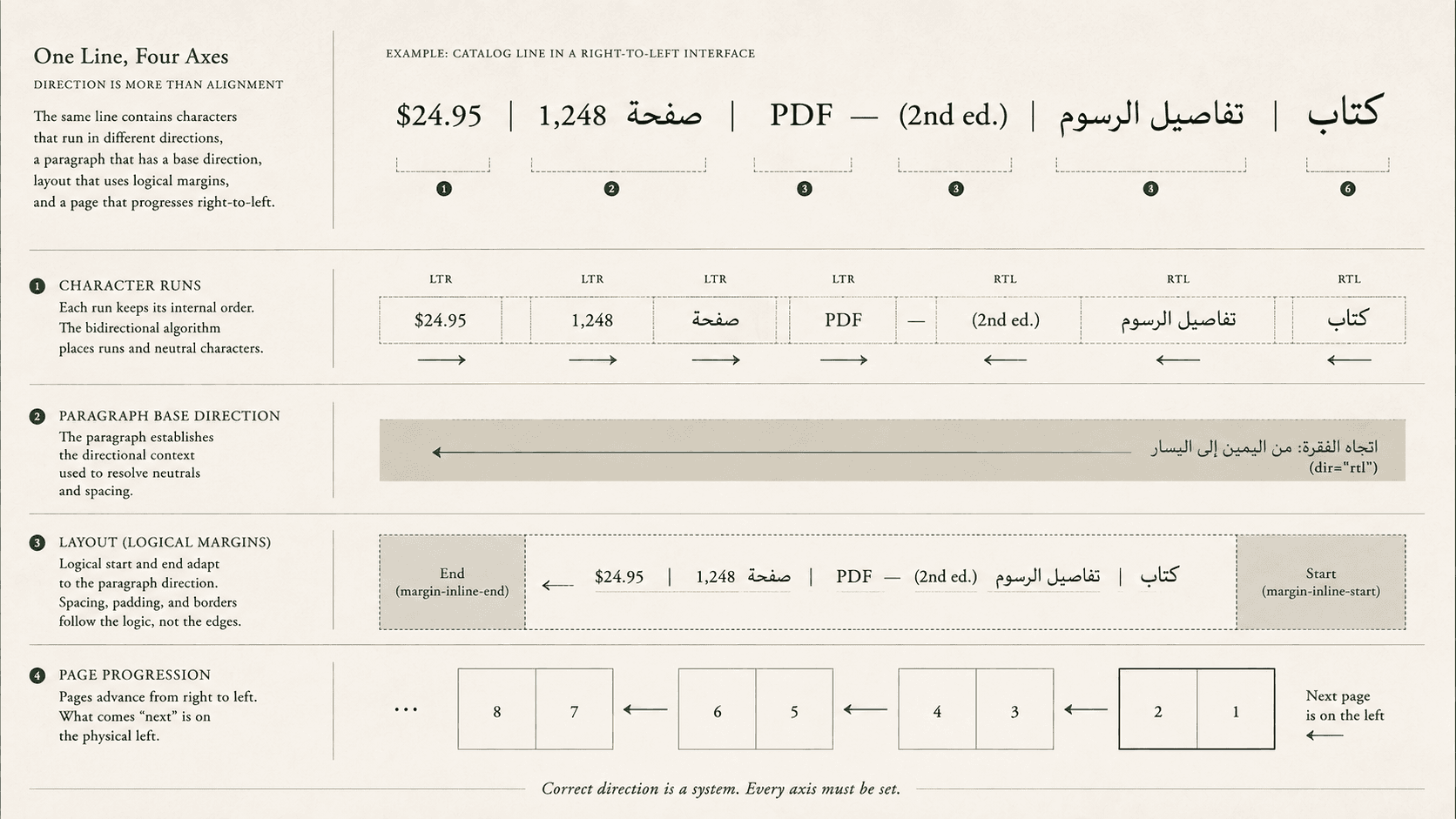
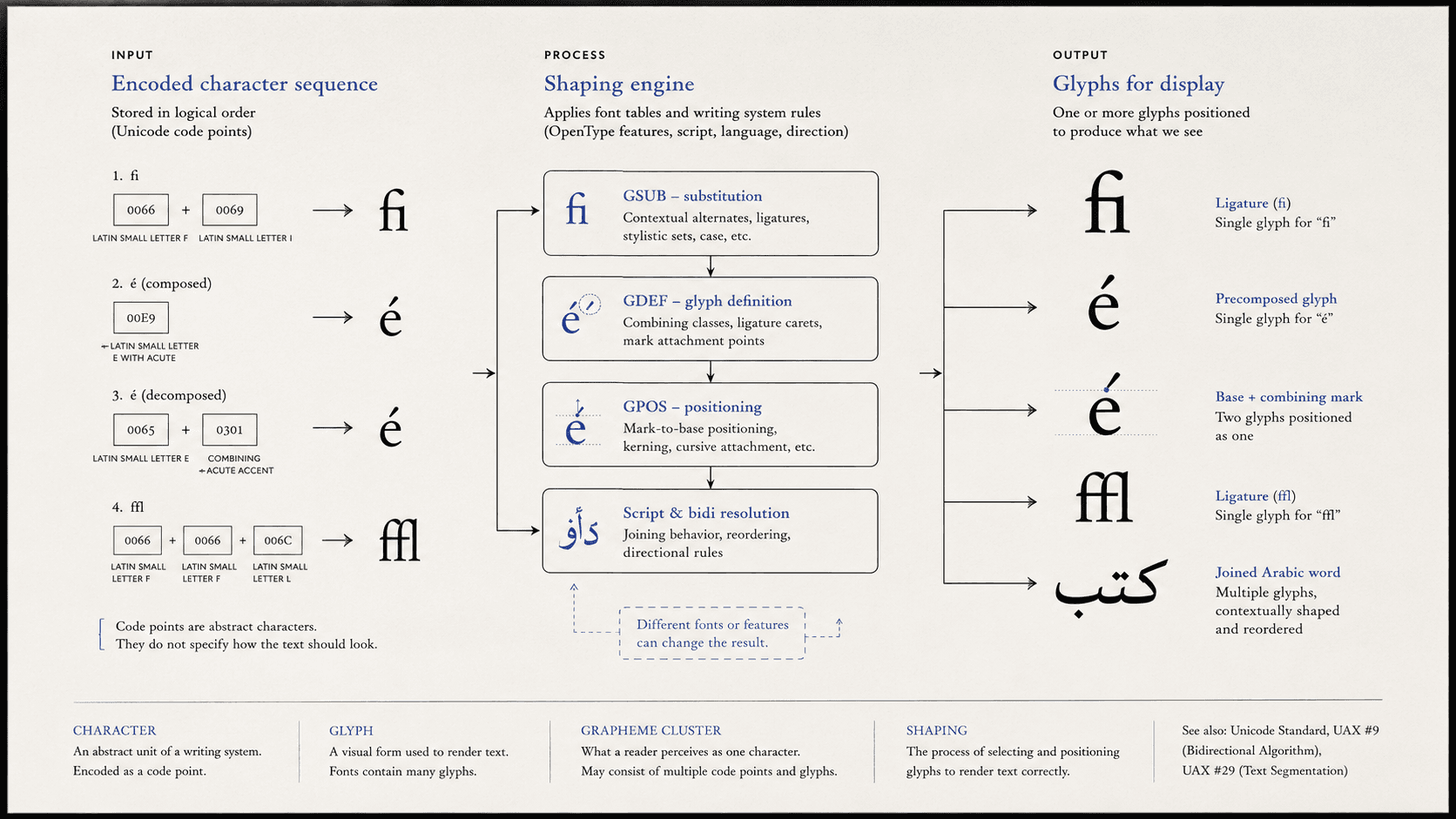
Encoded characters pass through shaping rules and emerge as several context-specific glyph forms.

The Character Is Not the Glyph

Digital text stores character identities while fonts and shaping systems create visible forms. Confuse those layers and publishing quietly breaks.

Read post →
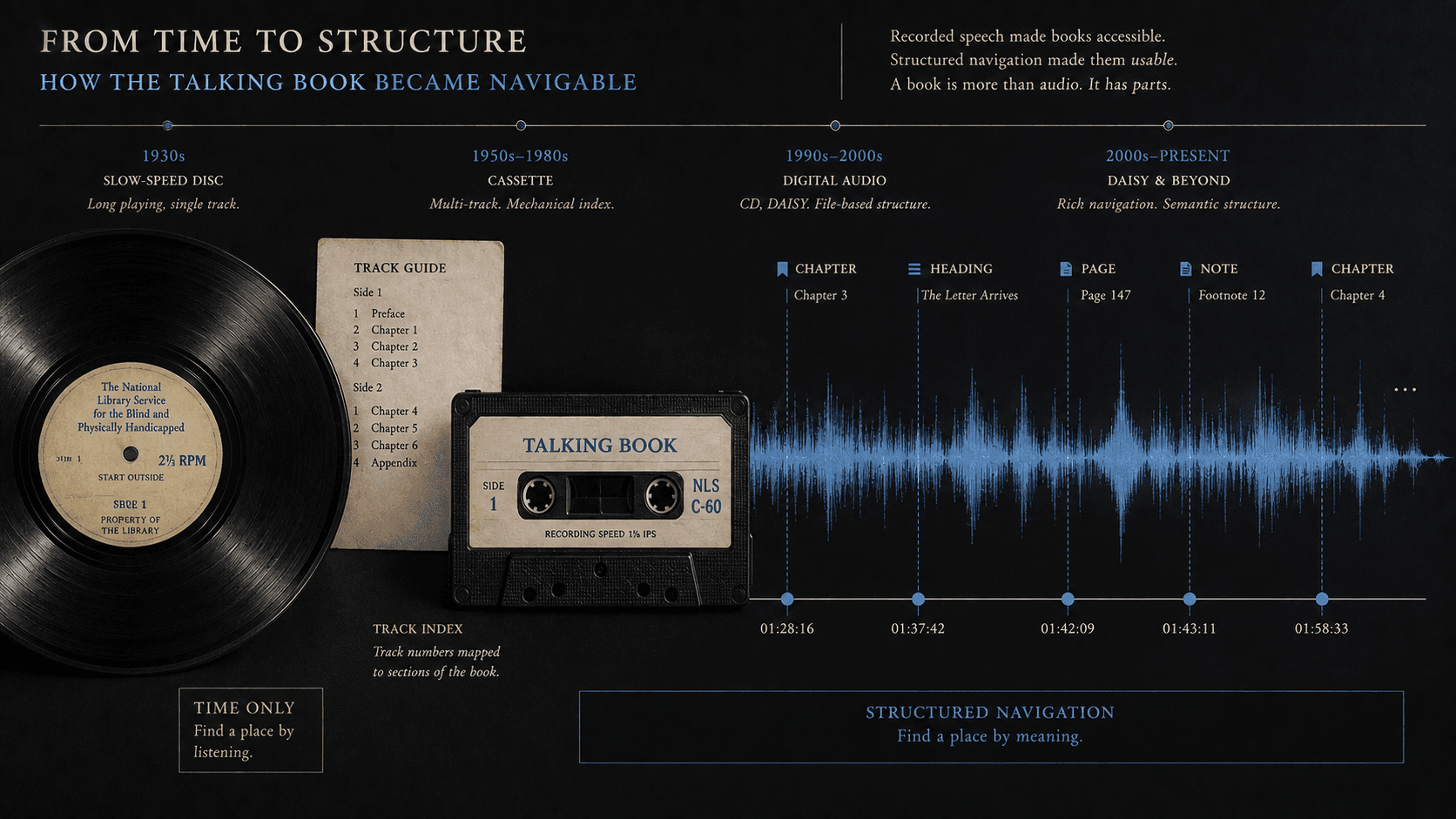
A record and cassette lead into an audio waveform marked with headings, pages, and notes.

How the Talking Book Became Navigable

Recorded speech became structurally book-like when readers could move by heading, page, note, and other meaningful units instead of time alone.

Read post →
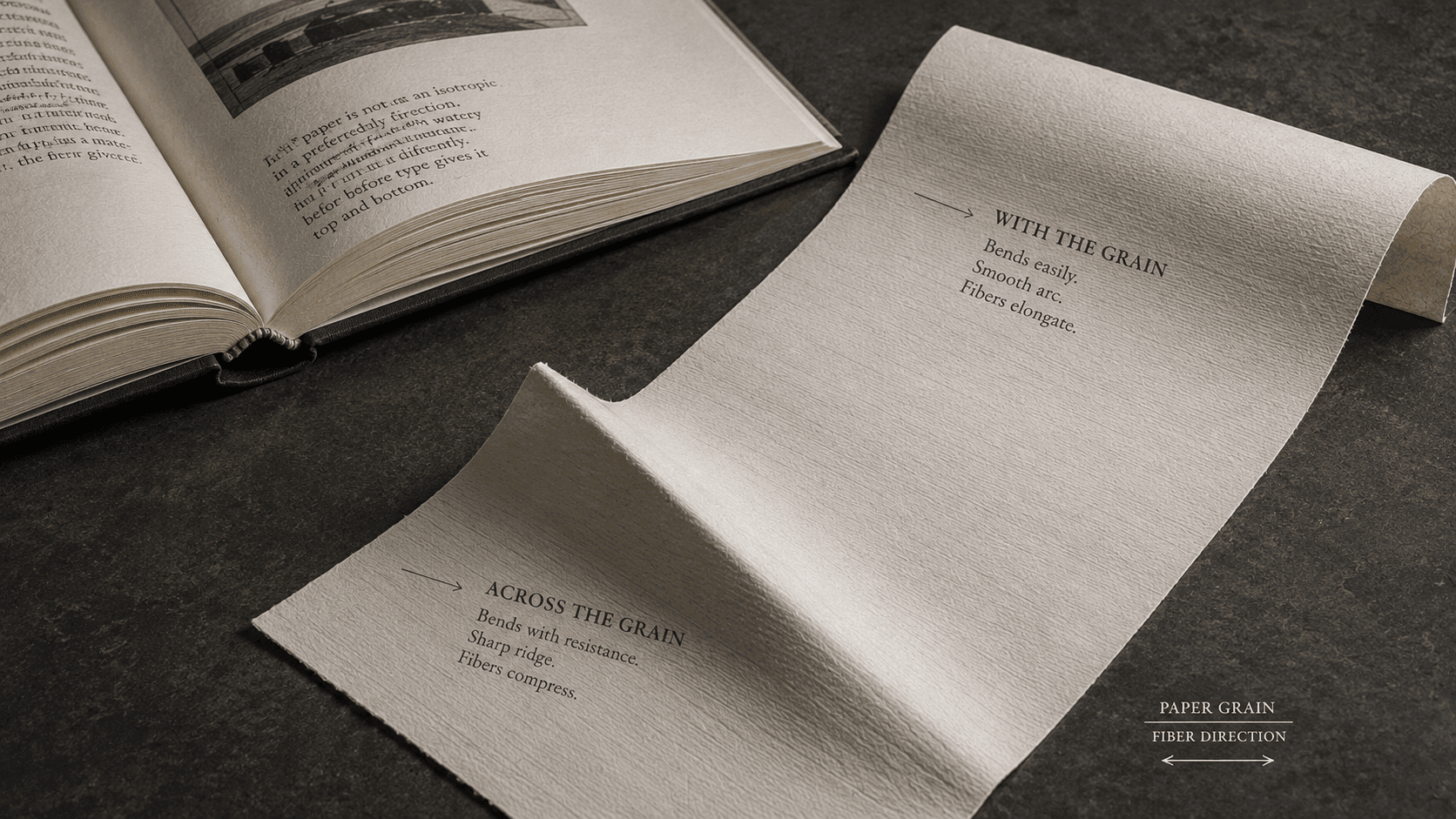
A paper sheet bends easily with its fibers and resists across them beside an open book.

Paper Grain Is a Direction

Paper has a material axis. Its direction affects folds, opening, warping, and the way a finished book responds to the reader's hand.

Read post →
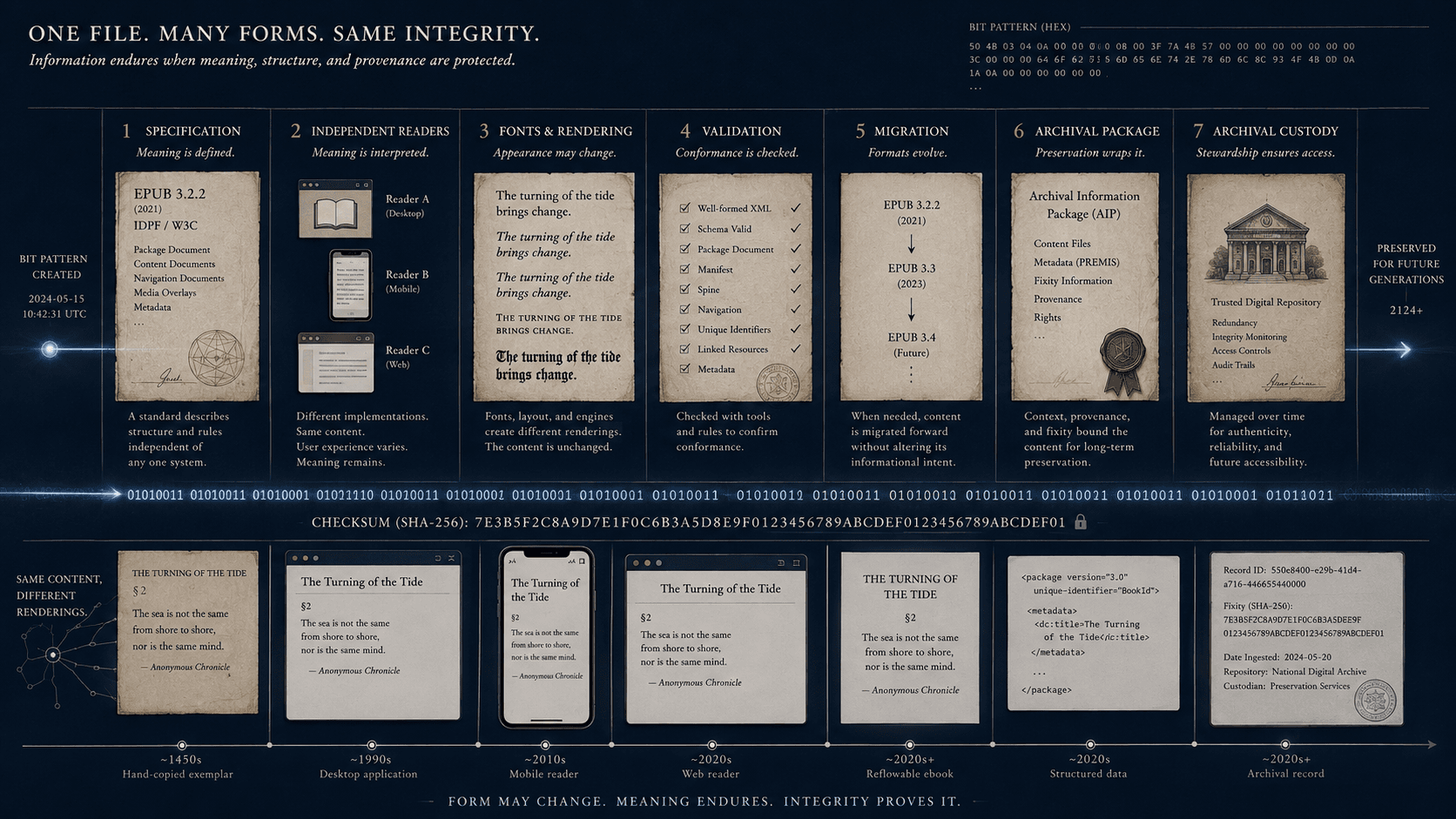
An unchanged file passes through specifications, software readers, migration, and archival custody over time.

A Format Is a Promise About the Future

A format survives through disclosure, implementations, adoption, dependencies, and stewardship. Open, standard, popular, and archival name different strengths.

Read post →
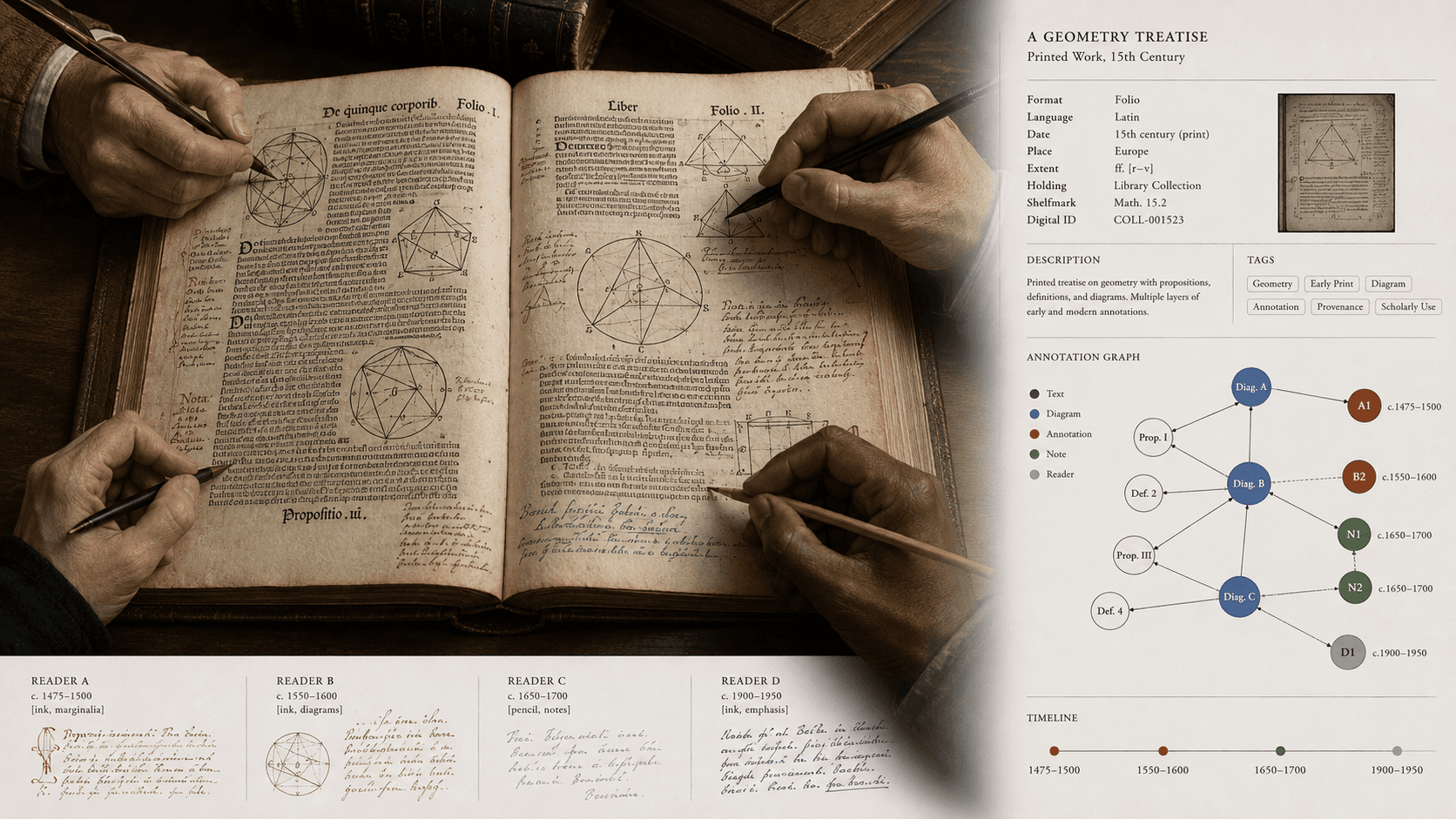
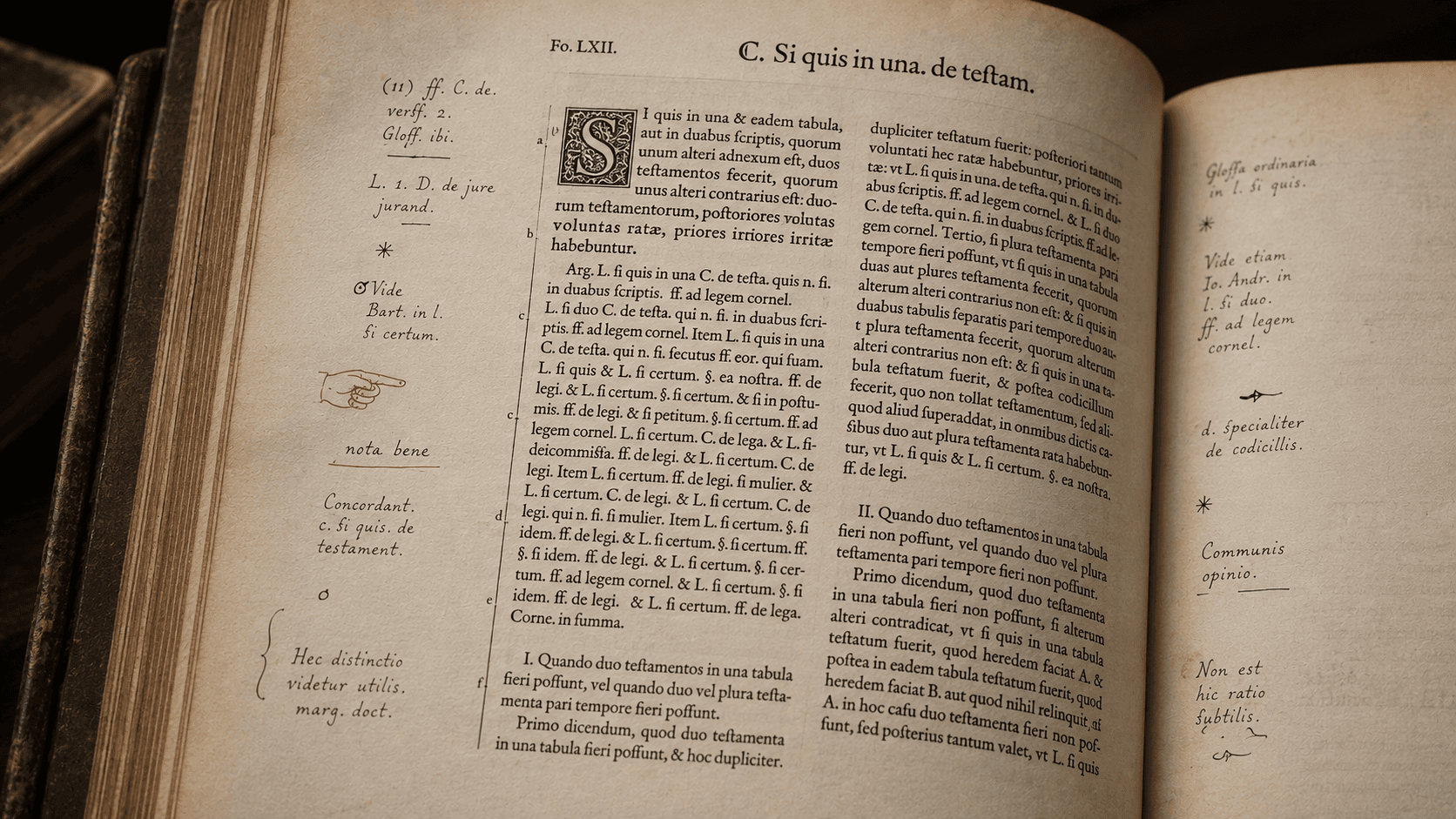
A geometry book with notes by several hands connects to a catalog record and digital annotation graph.

The Second Life of Marginalia

A reader's local mark can become historical evidence after custody changes. Its value depends on provenance, description, and restraint about what ink can prove.

Read post →
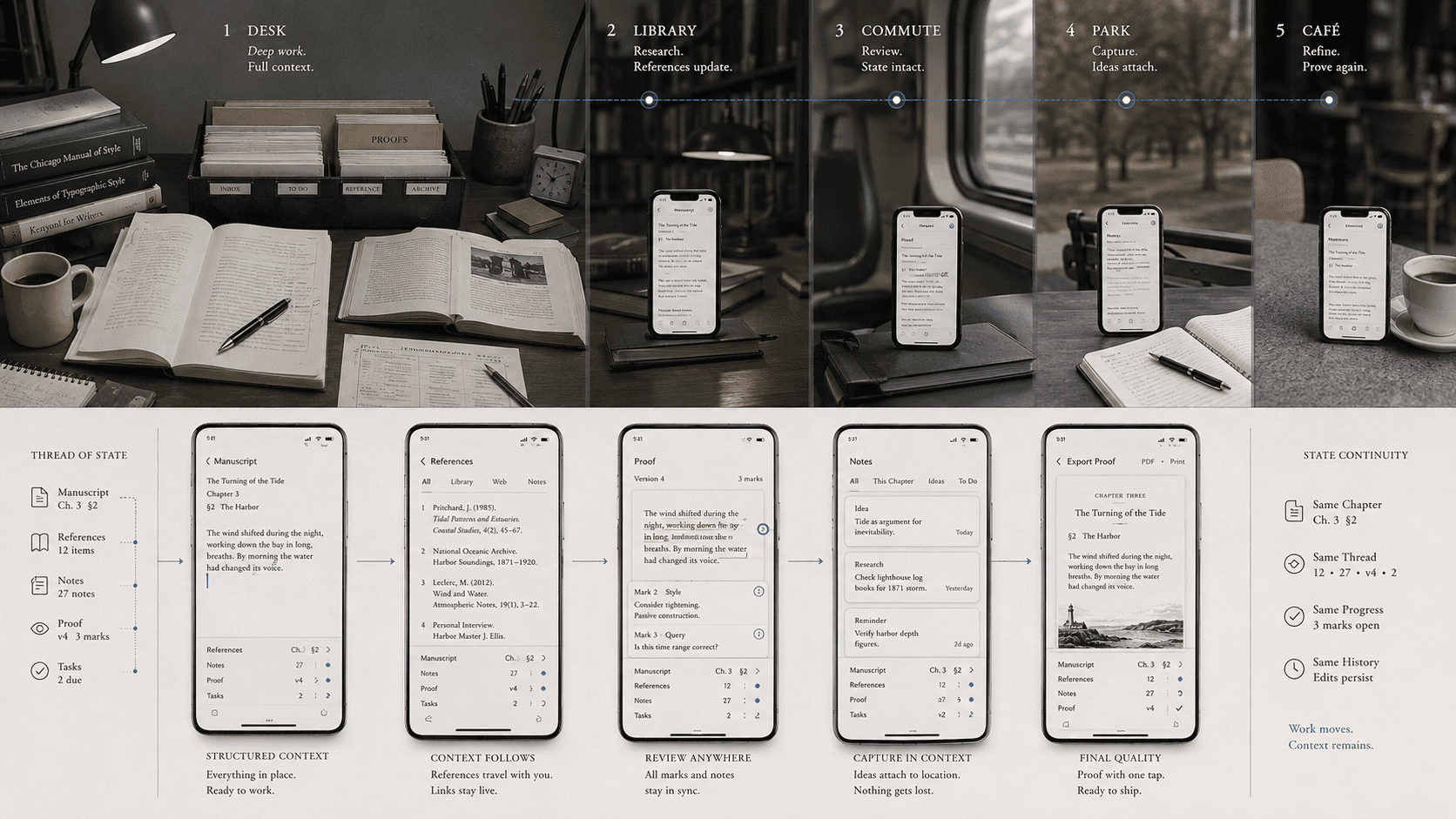
The context of a publishing desk condenses into a mobile workspace carried across several locations.

When the Computer Stops Being a Place

The desktop supplied context as well as screen space. Professional mobile publishing must redesign continuity, precision, custody, and the boundaries of work.

Read post →
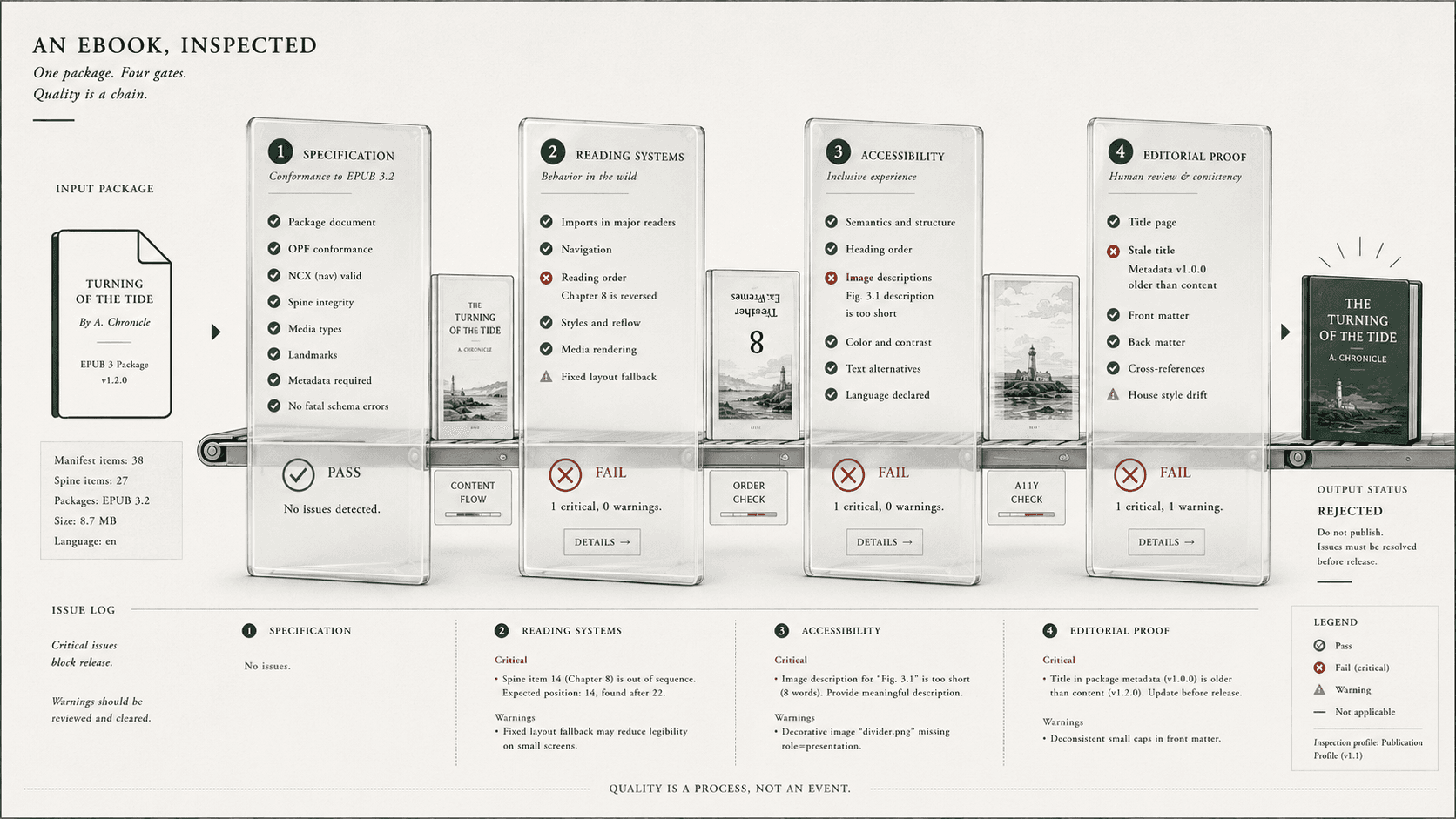
An ebook passes four checks for validity, interoperability, accessibility, and editorial quality.

What a Valid EPUB Can Still Get Wrong

EPUBCheck tests conformance. Interoperability, accessibility, and editorial soundness need other evidence. A quality workflow keeps all four verdicts separate.

Read post →
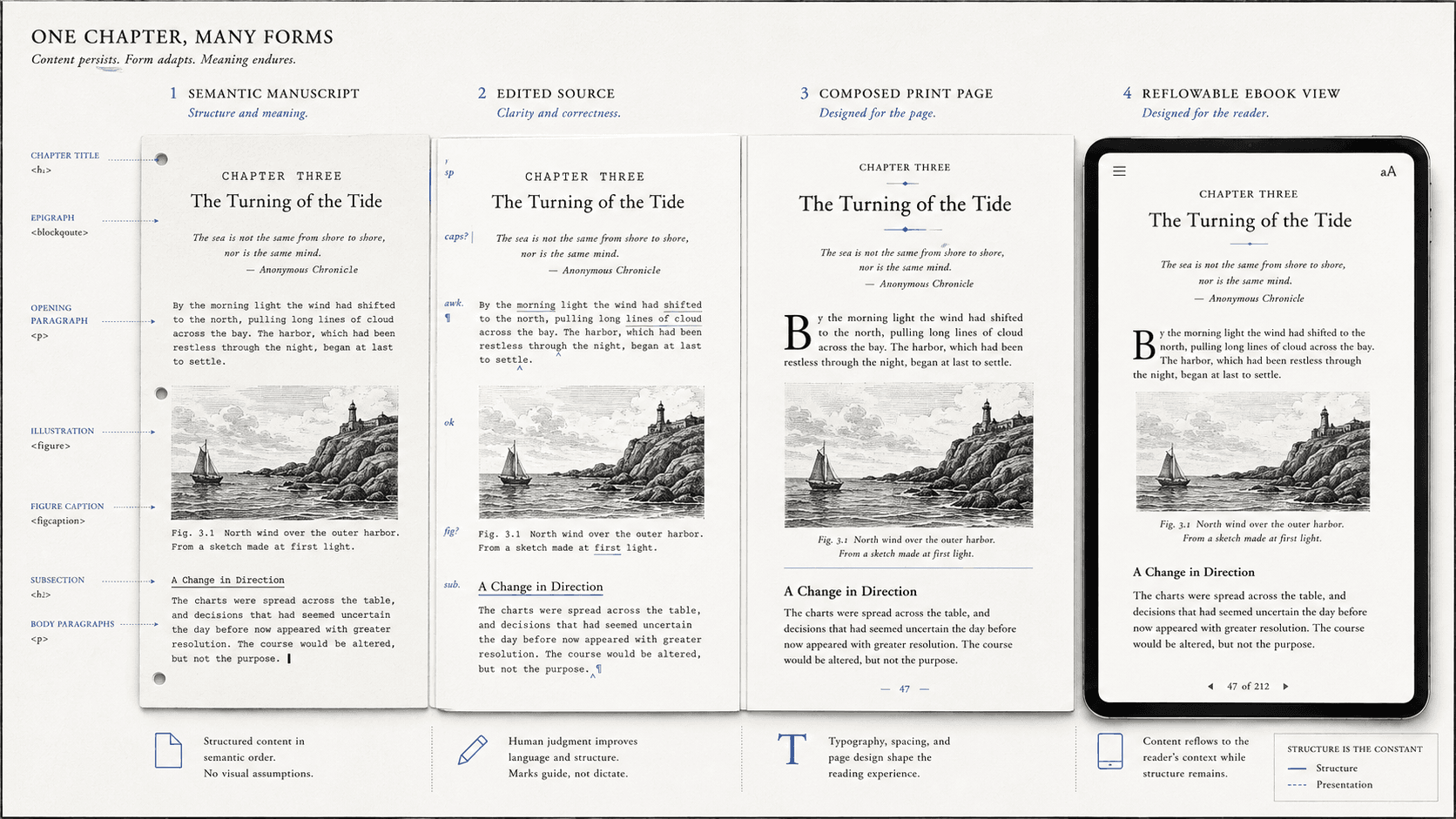
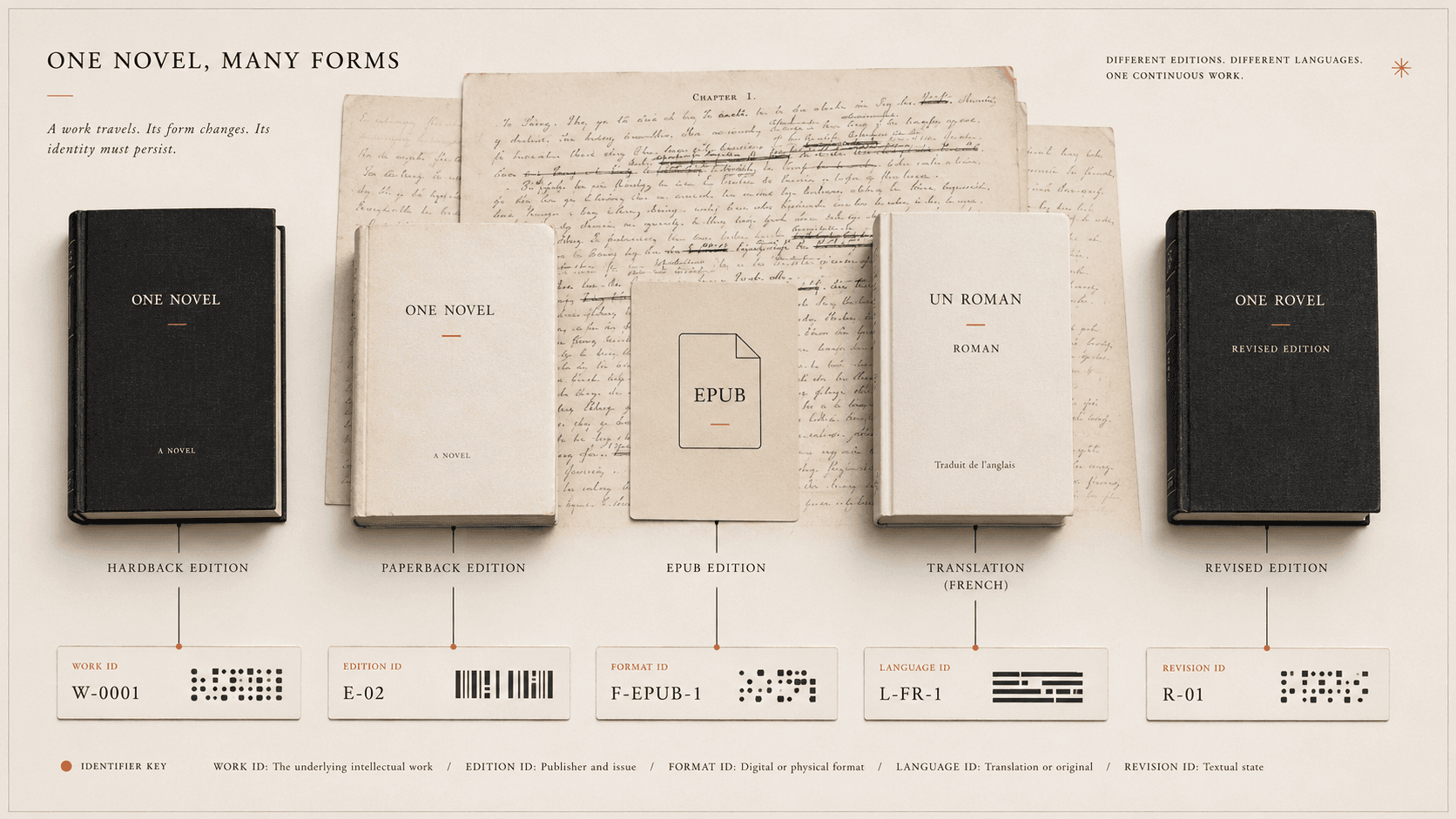
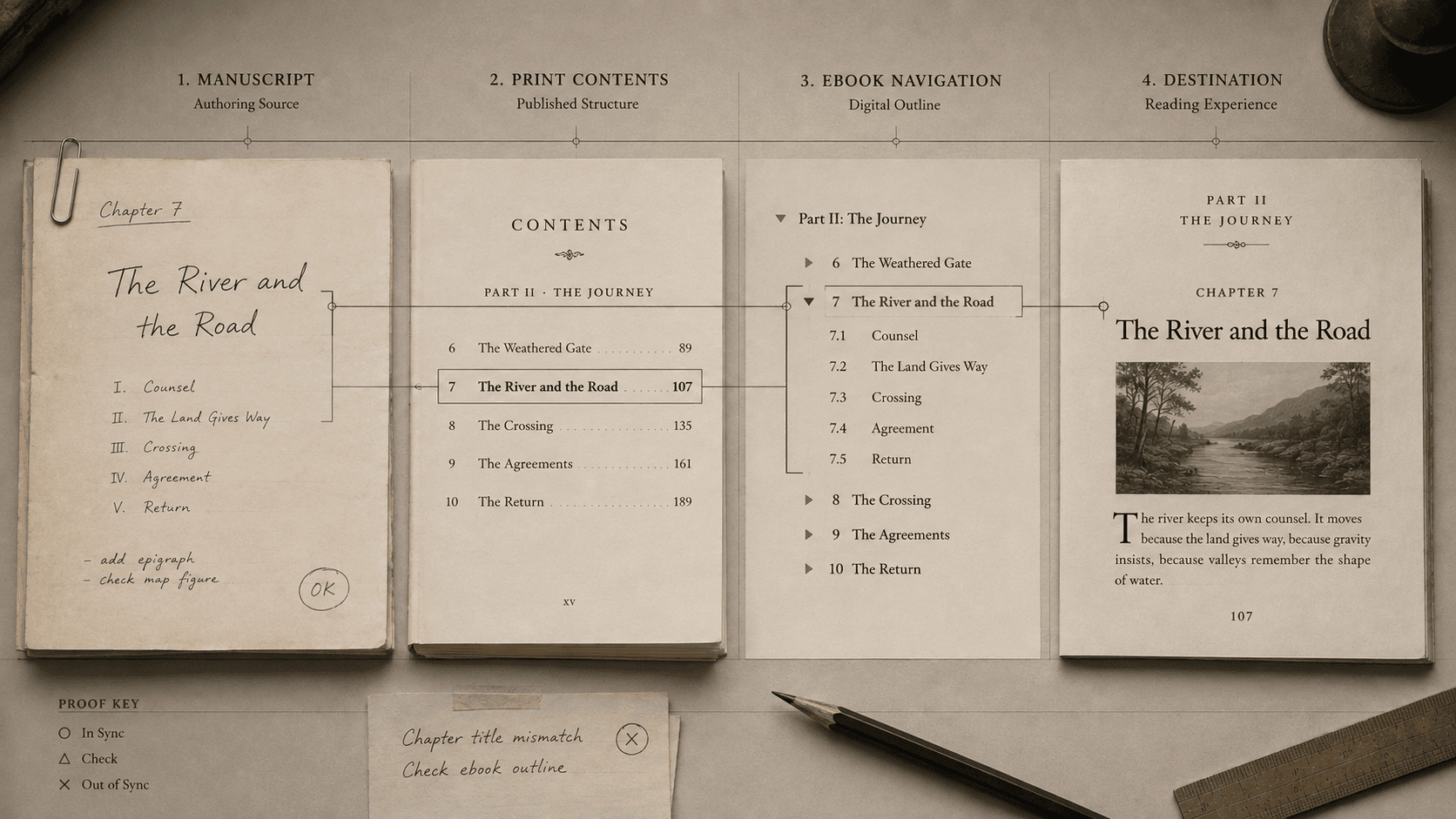
One chapter moves from manuscript to edited source, print page, and reflowable ebook.

The Manuscript Is Not the Book

A manuscript declares content and structure. A published edition resolves design, navigation, metadata, rights, and behavior for a particular output.

Read post →
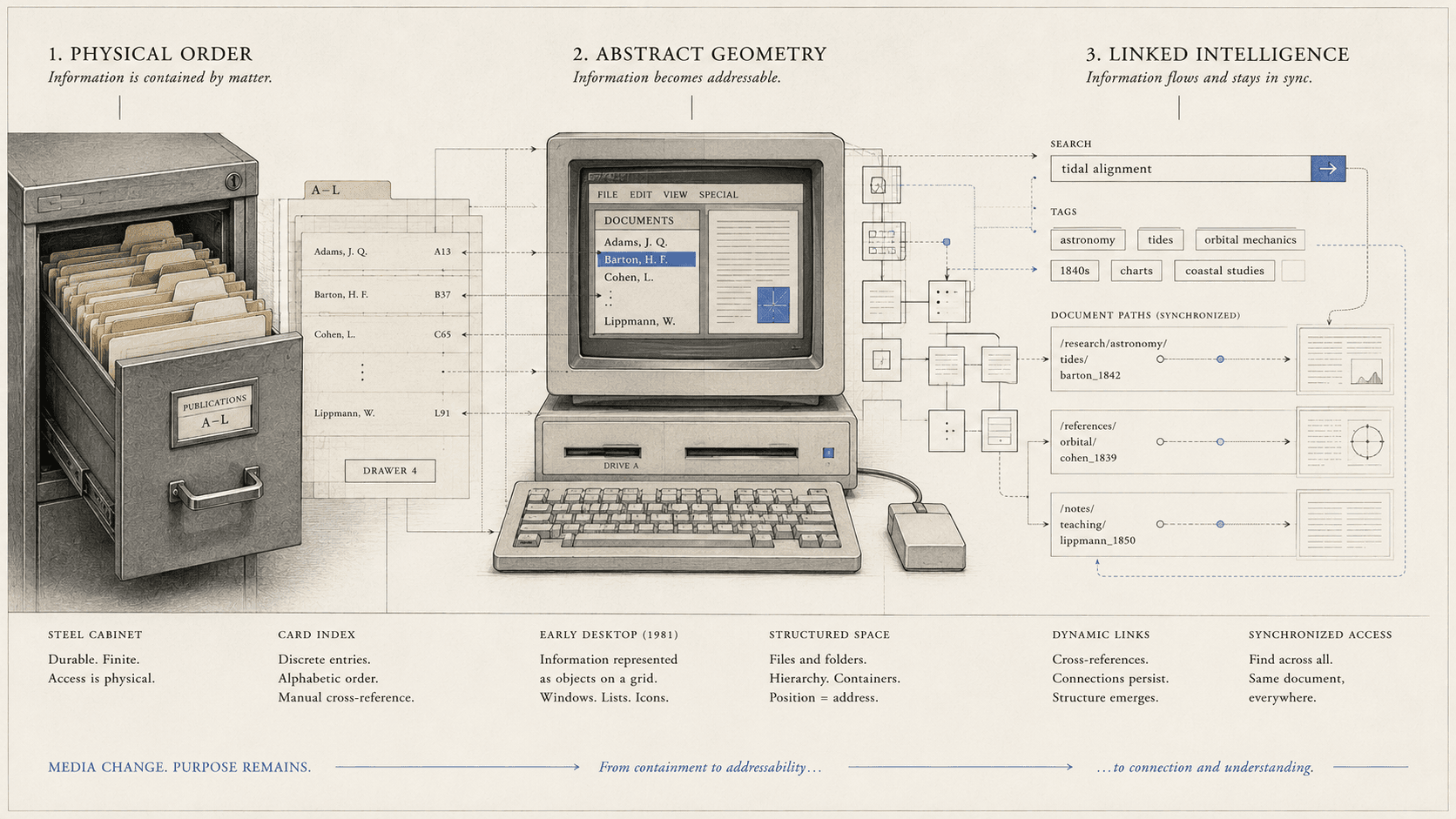
A physical filing drawer transitions into digital folders, search paths, tags, and synchronized documents.

The Filing Cabinet Inside the Computer

Files and folders made digital documents visible by borrowing office logic. The metaphor also made hierarchy and singular location feel natural. The Filing Cabinet Inside the Computer

Read post →
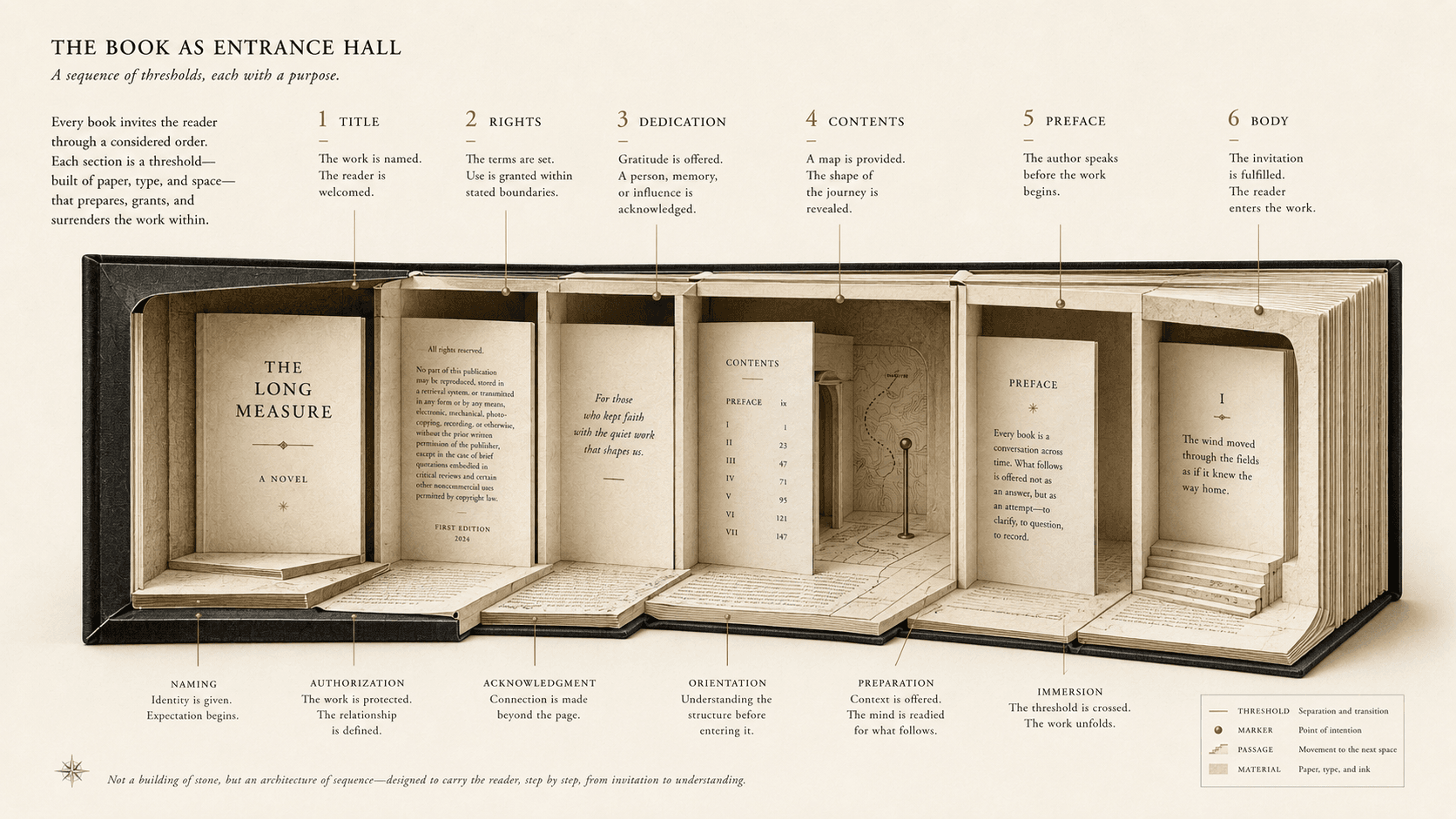
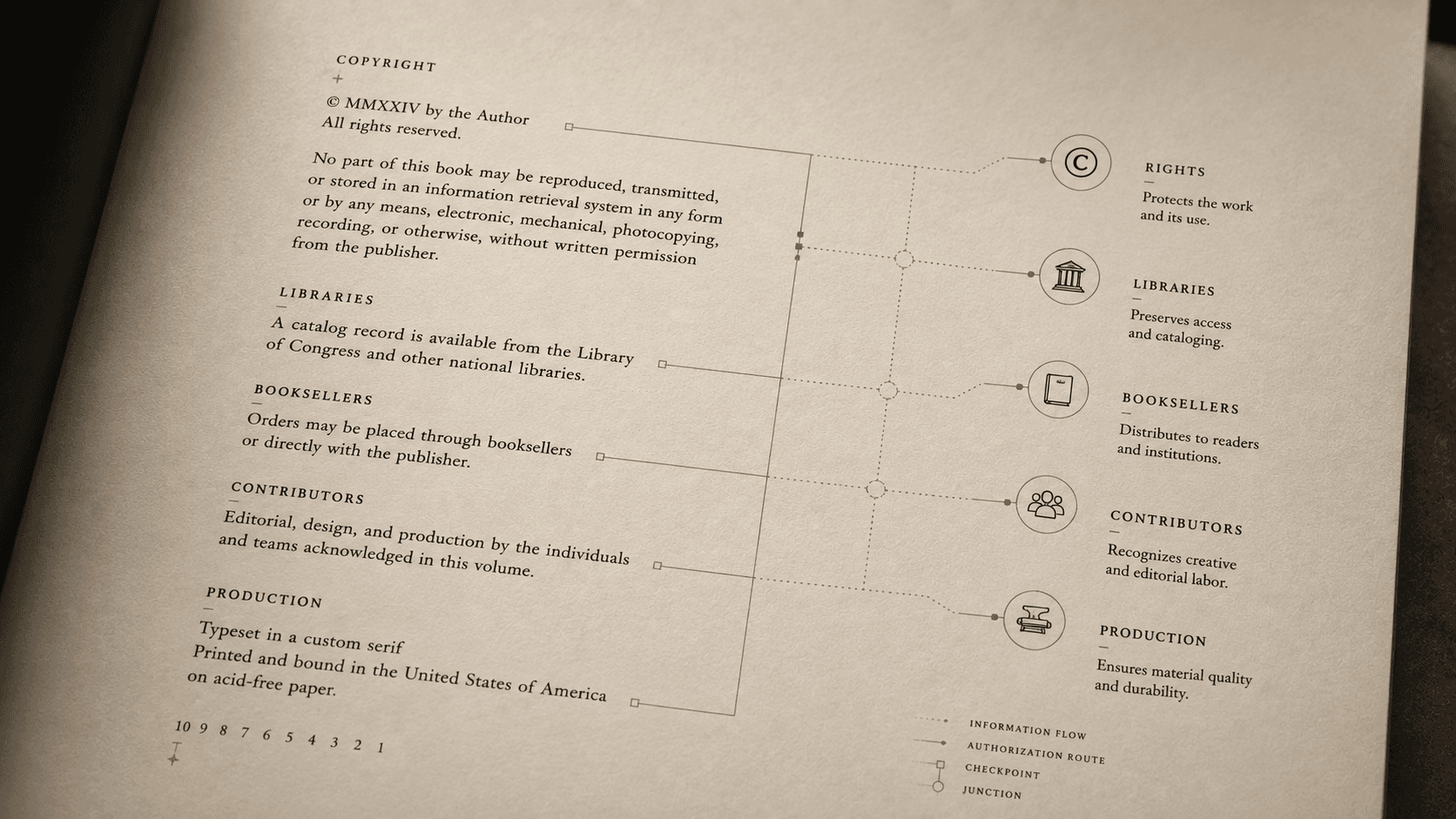
Layered paper thresholds represent the title, rights, dedication, contents, preface, and body of a book.

The Book Has More Than One Beginning

Front matter gives the marketplace, catalog, rights holder, dedicatee, navigator, argument, and story different ways to enter the same book.

Read post →
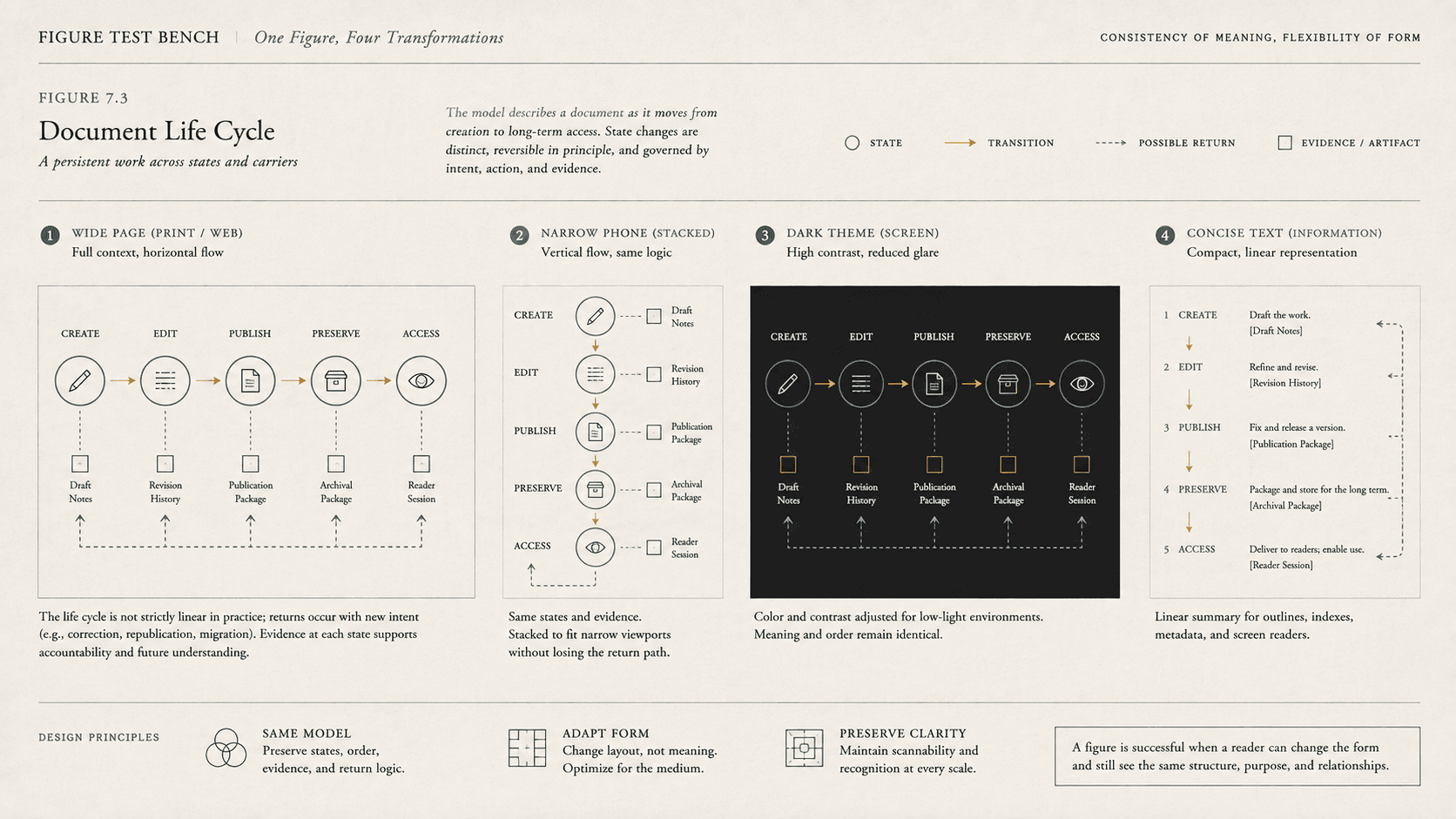
One technical figure appears on a wide page, narrow screen, dark theme, and as a text description.

Images That Survive Reflow

An ebook image must preserve its meaning when size, theme, pagination, and reading mode change. That starts with purpose, not pixel dimensions.

Read post →
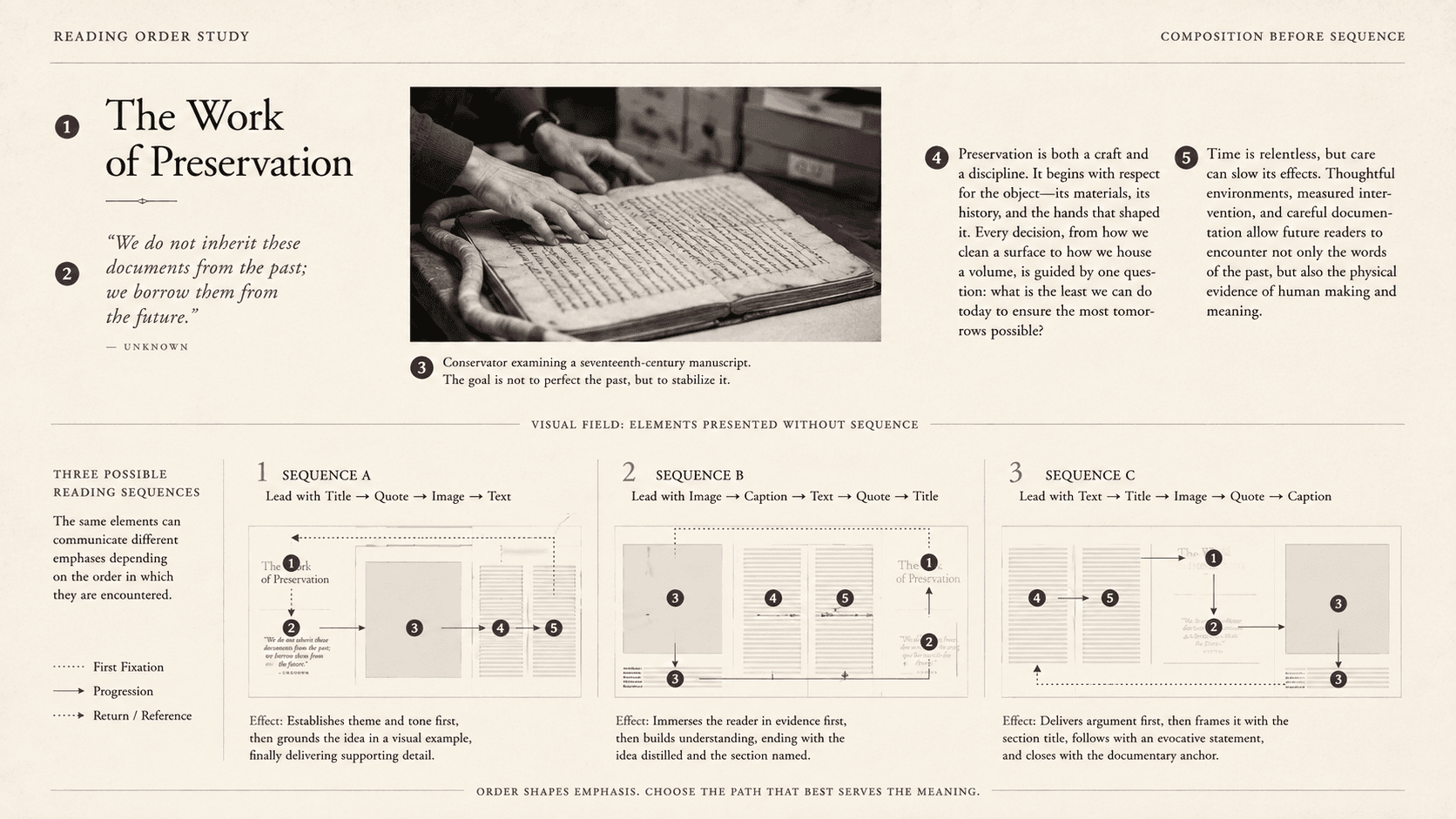
A complex page layout is shown with three different possible linear reading sequences.

Reading Order Is Part of the Book

Spine order, source order, visual position, and navigation can disagree. Because sequence changes meaning, reading order belongs to editorial production.

Read post →
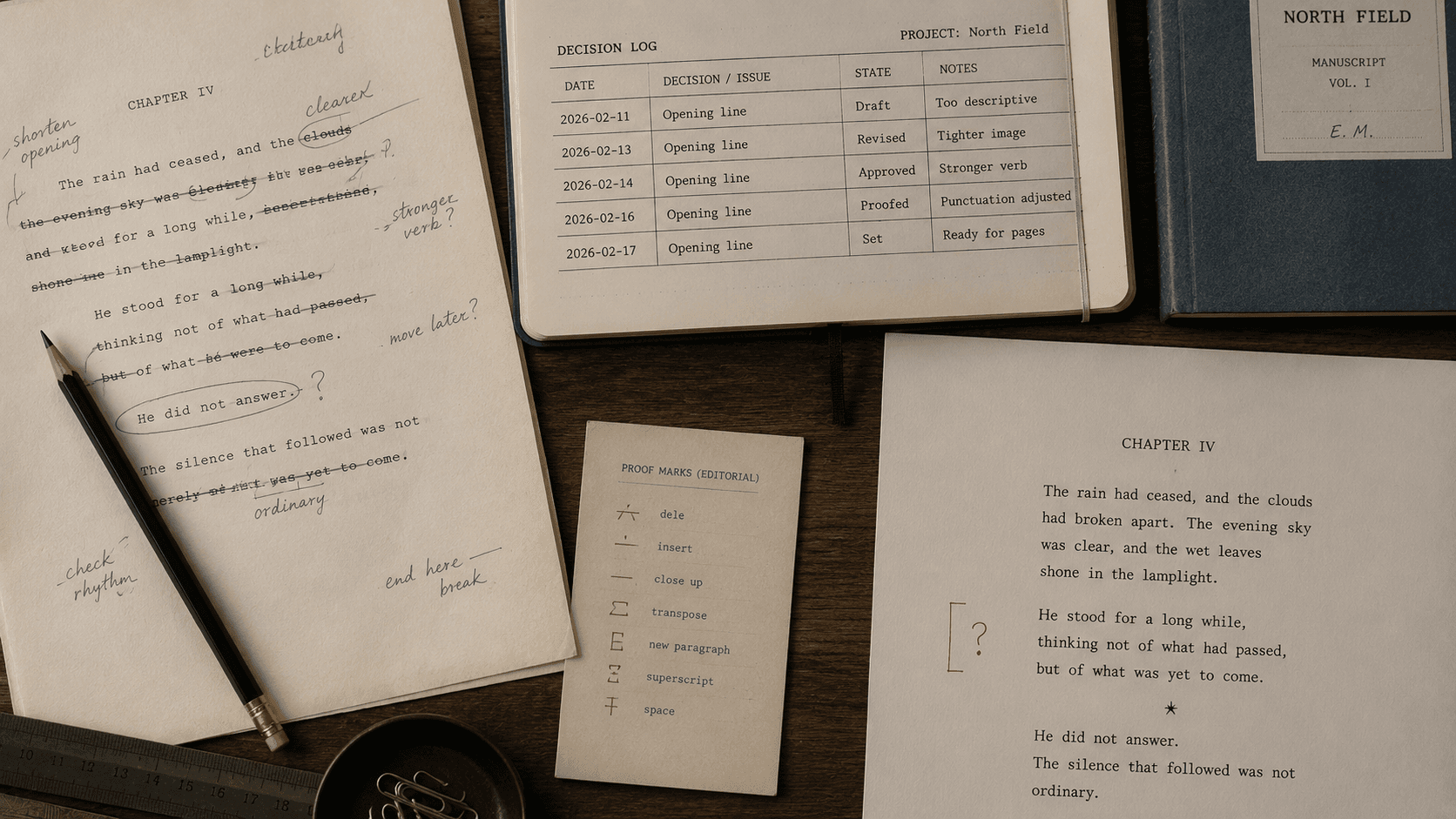
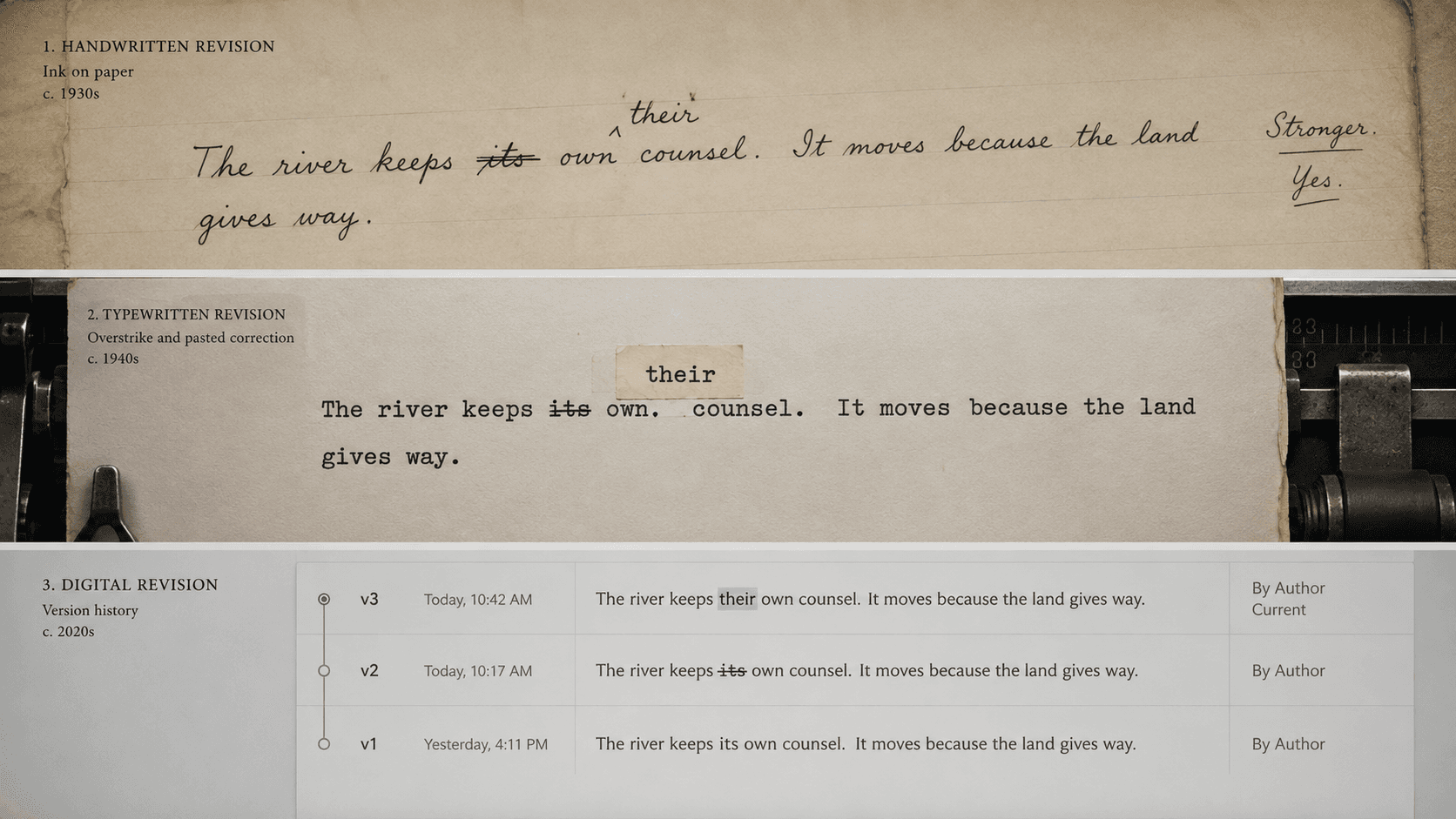
One sentence is revised by handwriting, typewriter correction, and digital version history.

Revision Before Undo

Every writing medium gives revision a different cost and leaves a different record. Undo lowers the immediate price while making survival depend on software and policy.

Read post →
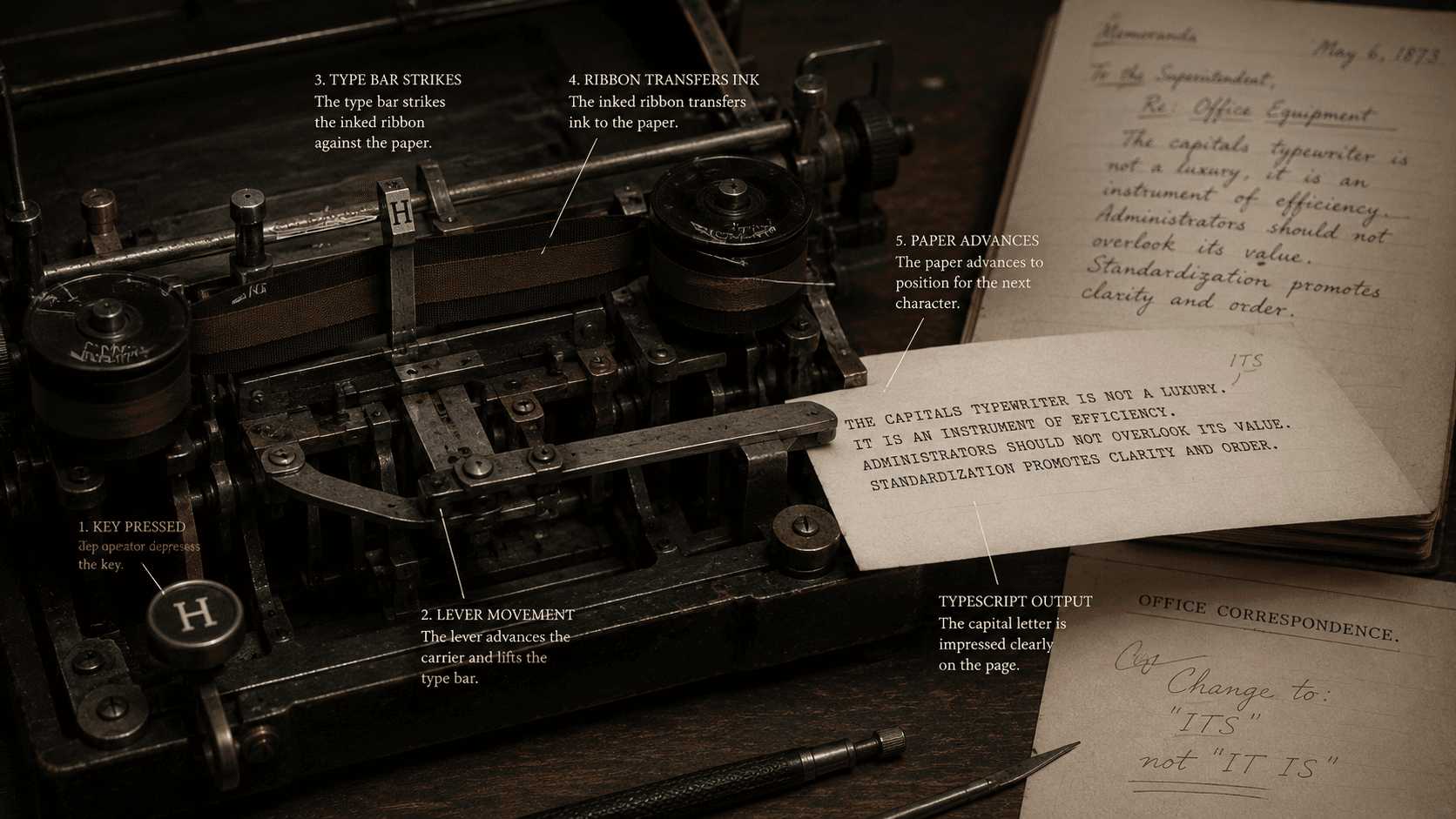
An early typewriter mechanism turns a keystroke into a capitals-only typescript beside handwritten notes.

When Writing Became Mechanical

The typewriter turned marks into mechanical operations and made inscription delegable, changing the manuscript, correction, office labor, and the alphabet itself.

Read post →
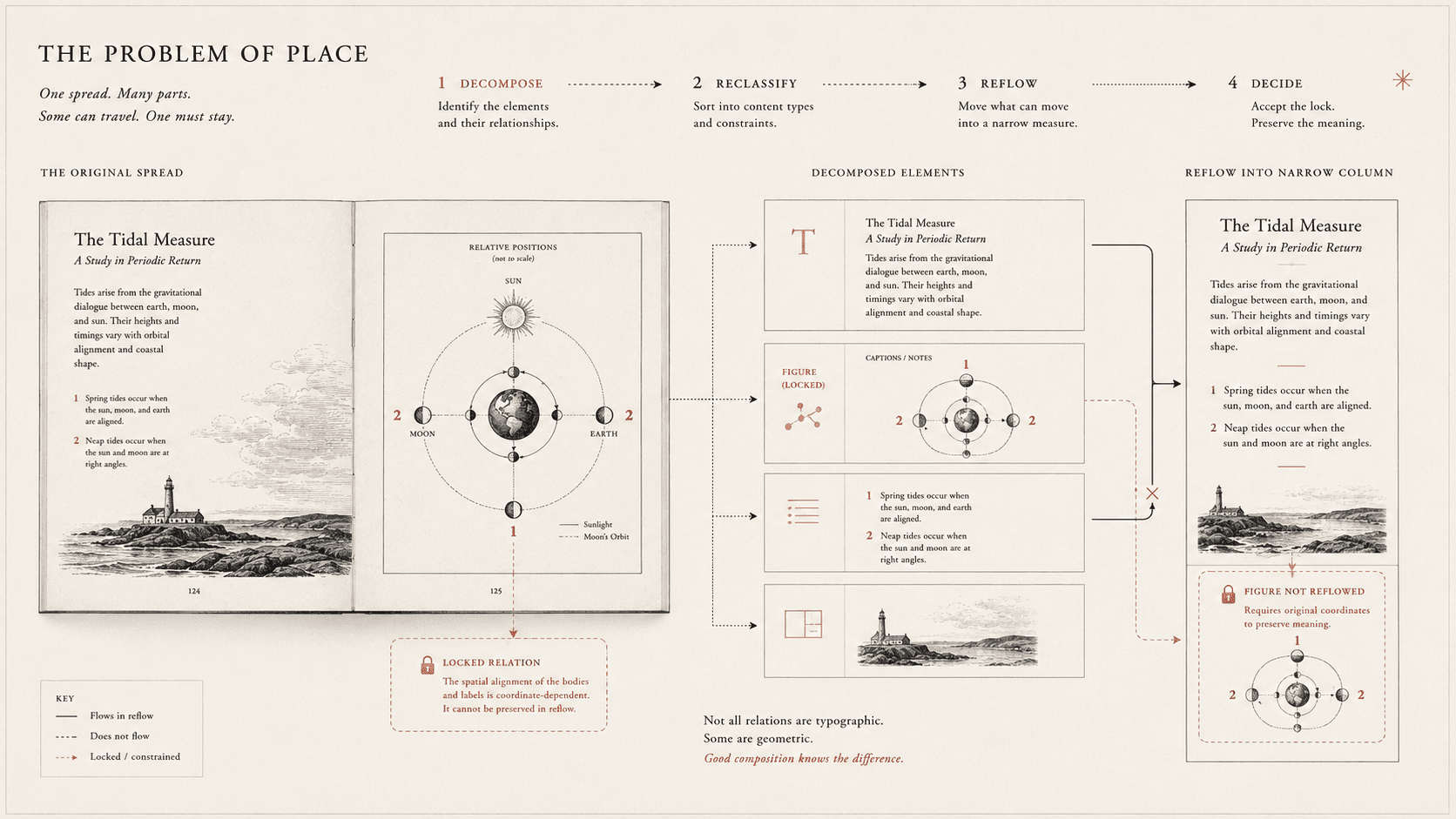
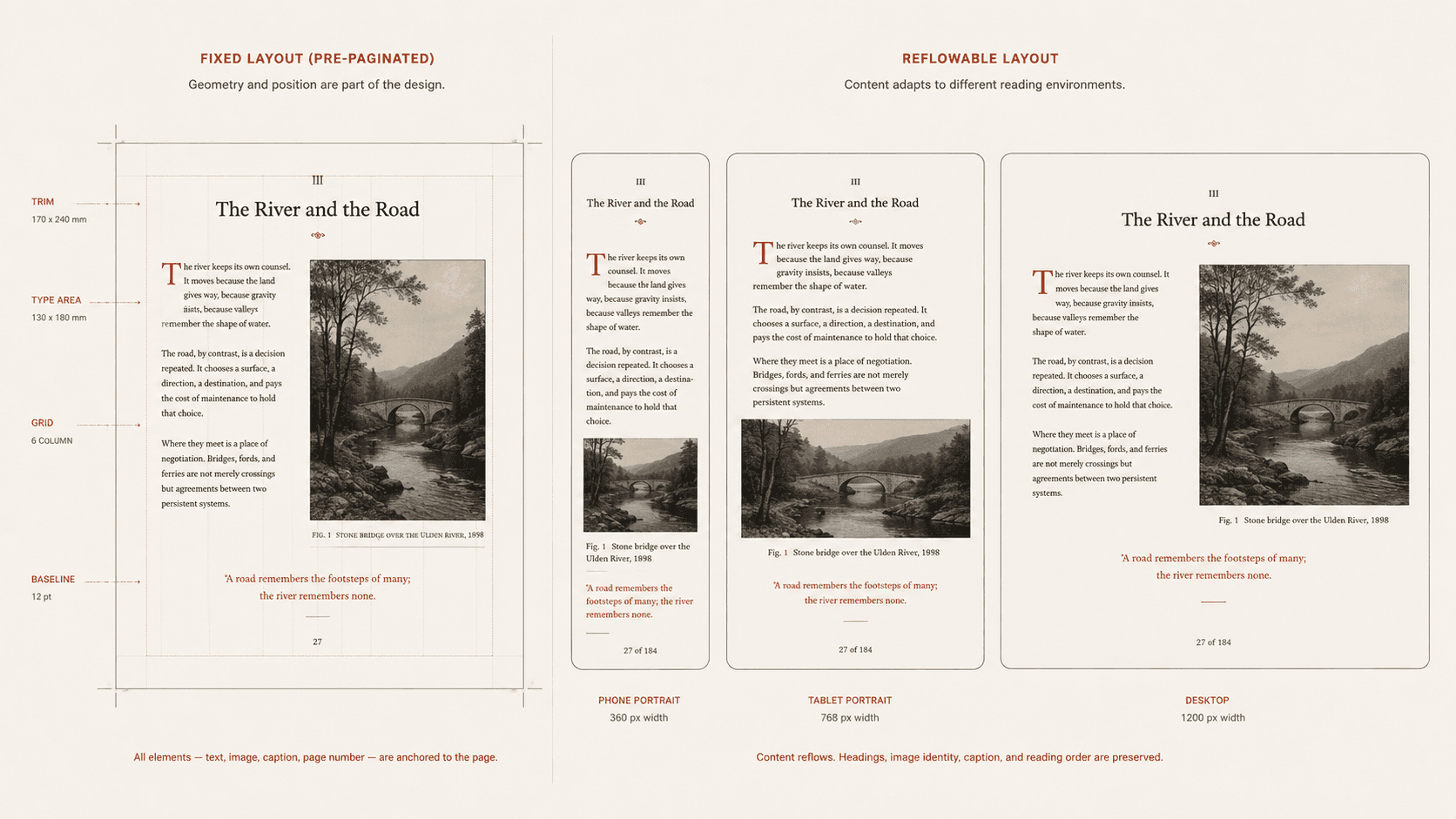
One document appears as a fixed print page and as text reflowing across three screen sizes.

PDF and EPUB Solve Opposite Problems

PDF preserves a composed page. Reflowable EPUB preserves structured content through recomposition. Choose by deciding what the publication cannot afford to change.

Read post →
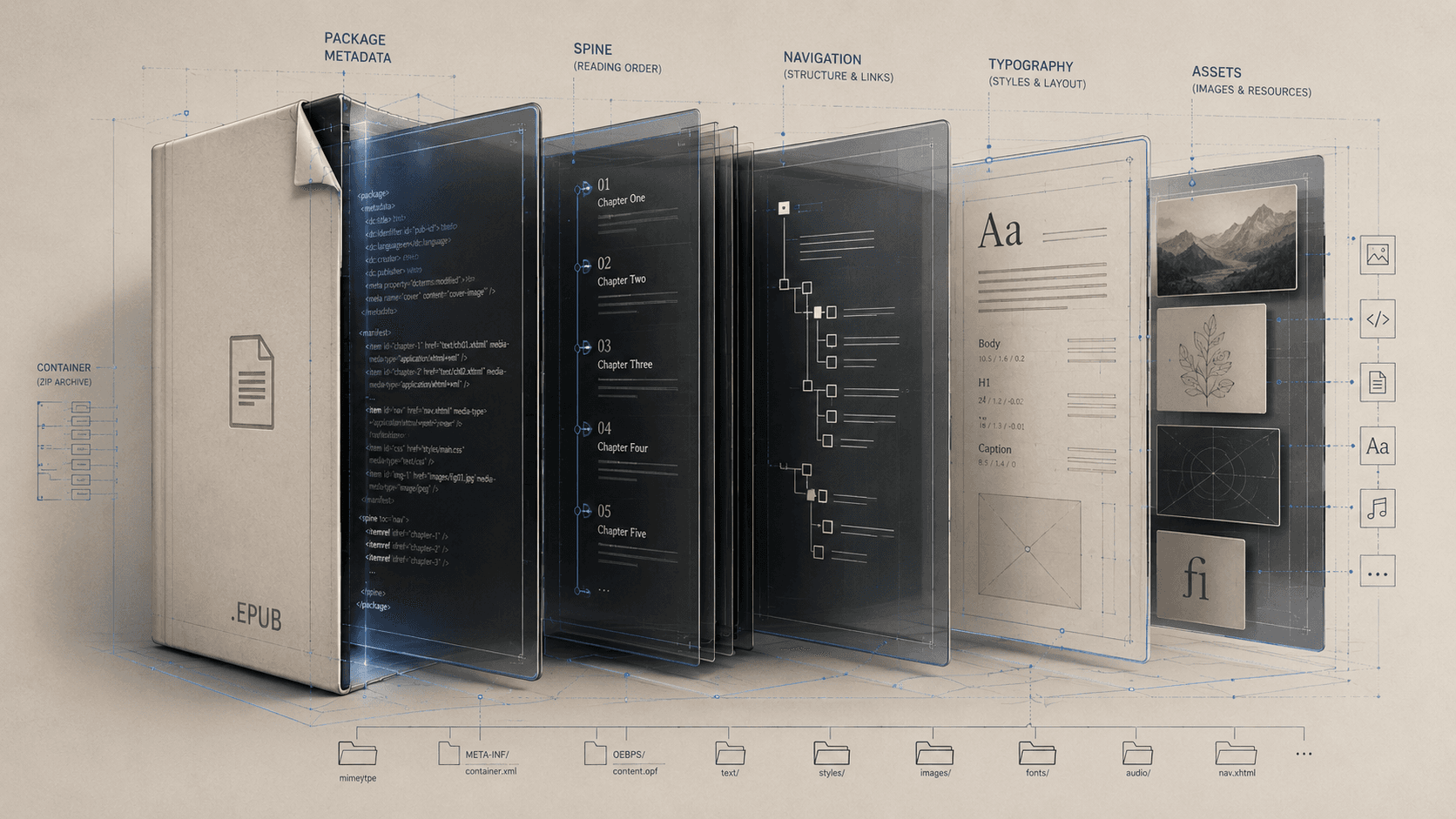
A single ebook file opens into layers representing metadata, chapters, navigation, styles, and images.

What Actually Lives Inside an EPUB?

Inside one EPUB file, metadata, resources, reading order, navigation, styles, and content form a publication through their relationships.

Read post →
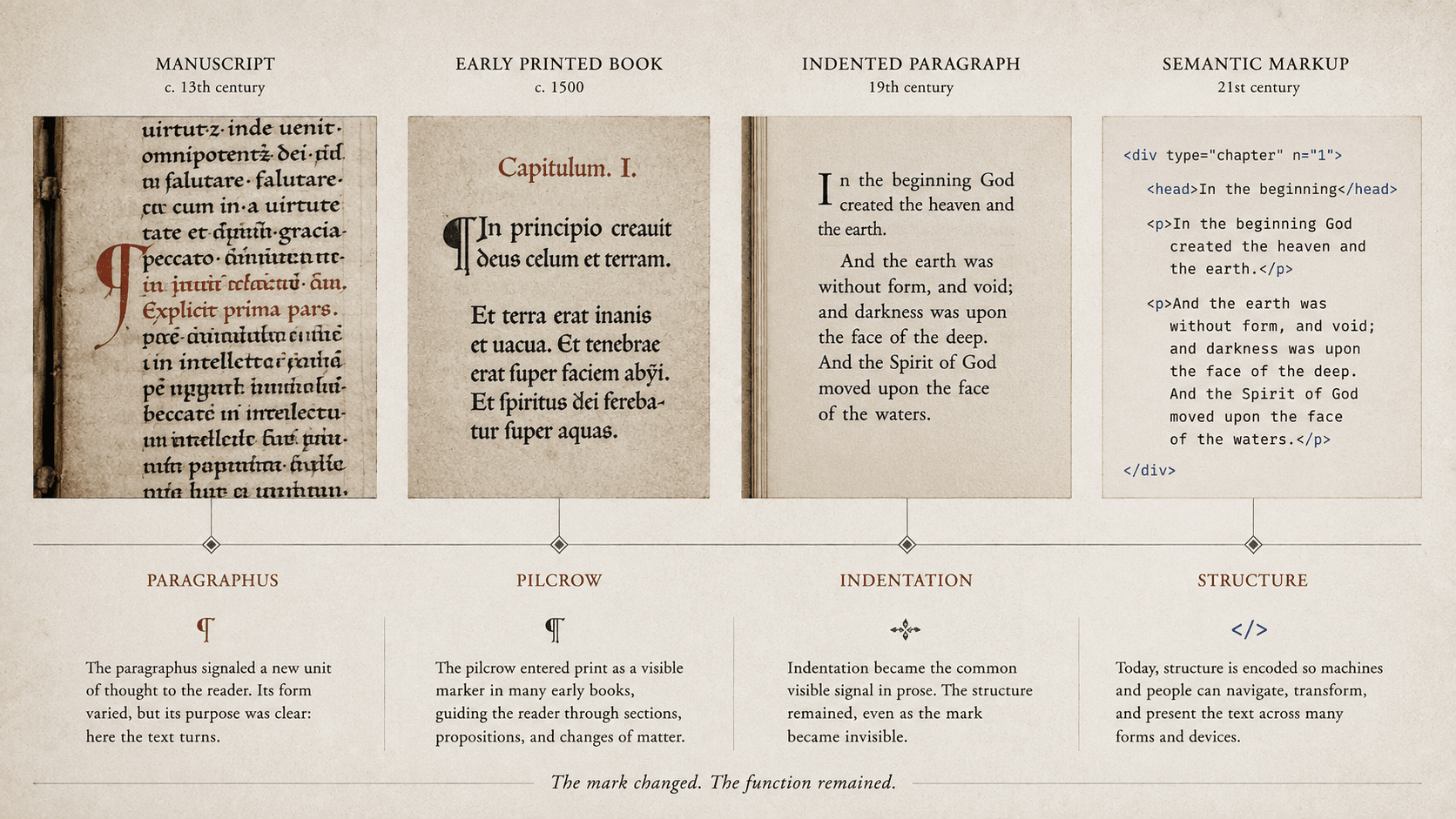
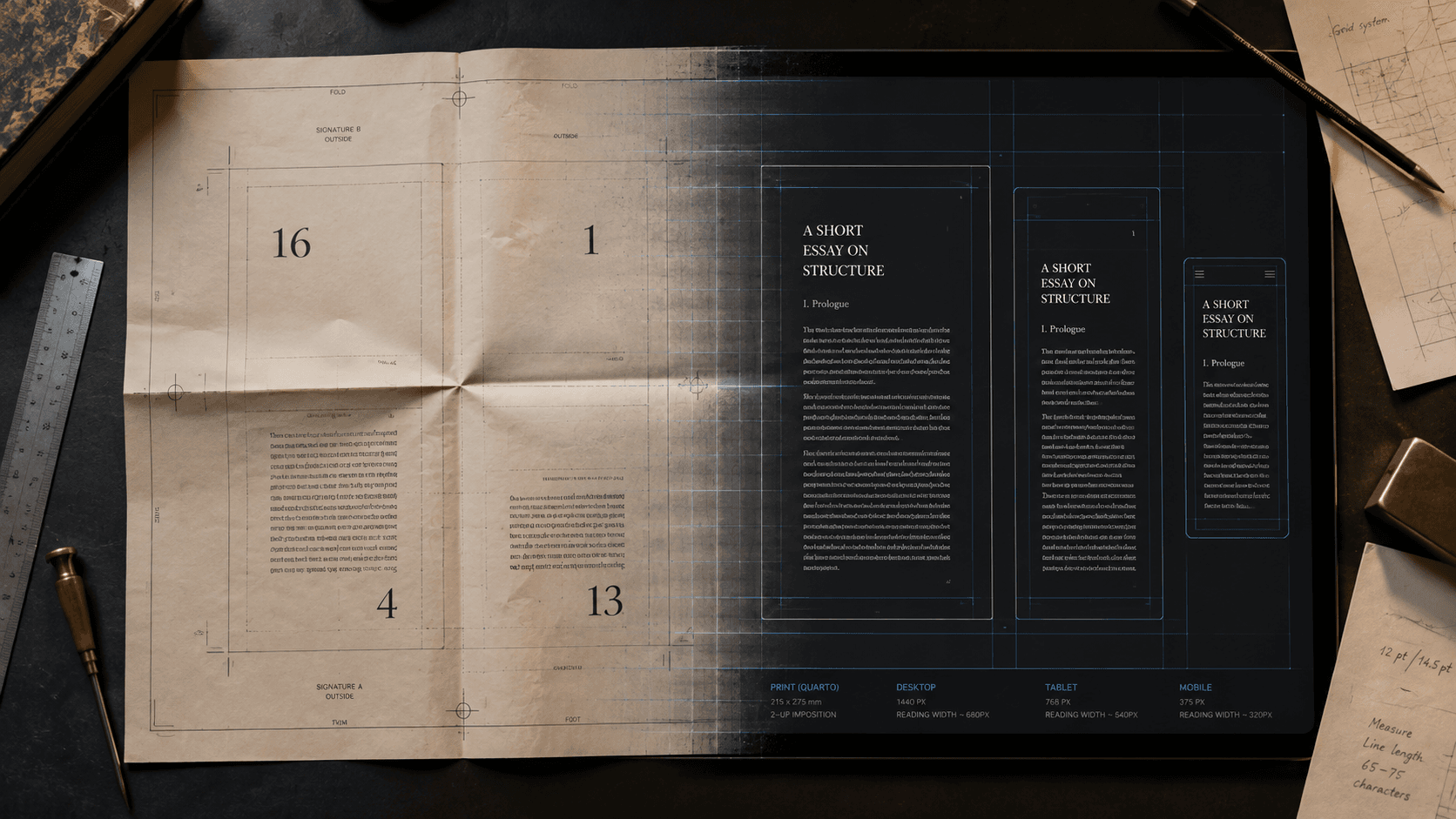
A folded print sheet with imposed pages transitions into a responsive digital text grid.

The Page Is an Interface

A page composes, locates, sequences, and records. Digital books reveal which of those functions need a fixed rectangle and which can survive without one.

Read post →